본문 바로가기 주메뉴 바로가기
국회도서관 홈으로 정보검색 소장정보 검색

결과 내 검색

동의어 포함

목차보기


1 Introduction and Methodology 1
1.1 Scope and Methodology 1
1.2 Timeline of China FDD Regulation 2
1.3 Safety, Public Health, and China’s Global Impact 2
1.4 Health Care Reforms and Access to Care and Products 4
1.5 Expansion Efforts to Develop Innovative Drug
and Device Industries 4
1.6 Government and Legal Reform 6
1.7 Chapters to Come 7
References 8
2 Agency Jurisdiction Over Food and Drug Law 9
2.1 Overview of the Current Agency Structure 9
2.2 History of Food and Drug Regulatory Jurisdiction
in China 10
2.3 Making of the NMPA 11
2.4 The Structure of NMPA 12
2.5 NMPA-Affiliated Centers and Provincial Counterparts 13
2.6 Provincial-Level Medical Product Associations 14
2.7 Food Agencies 14
2.8 Other Relevant Functions of SAMR 15
2.9 The Ministry of Agriculture and Rural Affairs 16
2.10 China Customs Administration 17
2.11 National Health Commission 18
2.12 National Healthcare Security Administration 19
2.13 The Ministry of Science and Technology 20
2.14 China National Intellectual Property Administration 20
2.15 Ministry of Public Security 21
2.16 Other Ministries and Agencies 22
2.17 China’s Court System and Food and Drug Enforcement 23
References 23
3 Administrative Law Concepts and Enforcement Powers 25
3.1 Overview of Other General Legal Concepts 25
3.2 Constitutional Law and Legislation 26
3.3 Administrative Licensing and Related Policies:
Improvement of Efficiency 27
3.4 Public Supervision as a Regulator 29
3.5 Open Government Information 30
3.6 Administrative Penalties and Compulsory Measures 31
3.7 Administrative Penalty Procedure 31
3.8 Administrative Compulsory Measures 32
3.9 NMPA and Provincial Administrative Rules 33
3.10 Administrative Reconsideration 36
3.11 Administrative Litigation 37
3.11.1 Vellpharm v. State Food and Drug Administration
[now NMPA] (2015) 38
3.12 Administrative and Civil Enforcement in Practice 45
3.12.1 How Do Enforcement Issues Begin? 45
3.12.2 Investigations and Establishment of Cases? 46
3.12.3 What Evidence Is Needed? 47
3.12.4 When to Seek Reconsideration or Appeal? 48
3.12.5 When to Consider Settlement? 49
References 50
4 Common General Principles of China Food
and Drug Regulation 53
4.1 Separation of Imported and Domestic Pathways 53
4.1.1 Imported Product Pathway 53
4.1.2 Domestic Pathway 54
4.1.3 Differences Between the Imported and Domestic
Pathway 54
4.2 Evolution of the System of Pre-Approvals 57
4.2.1 Reduction of Pre-Approvals/Licenses 57
4.3 Creation of True Product Licenses 58
4.3.1 History of Non-Product Specific Licenses 58
4.3.2 Evolution of the Product License System 59
4.3.3 Restriction of Supply Chain Through the Product
Life Cycle 60
4.3.4 Specialized Facility Licenses 61
4.4 Requirement for Local Testing and Clinical Data 62
4.5 Reliance on Foreign Approvals 62
4.6 Use of Technology 63
4.6.1 Websites and Online Databases 63
4.6.2 Online Submission Systems 64
4.7 Reliance on Conformity Standards Versus Safety
and Effectiveness Data 65
4.8 Use of Experts 66
4.9 Internationalization 67
4.10 Intellectual Property 70
References 72
5 Pharmaceutical Regulation in China 75
5.1 Introduction 75
5.2 Content of China’s Drug Market 76
5.3 China’s Drug Paradigm and Policy Shift 78
5.4 Drug Definitions and Categorization in China 80
5.4.1 Definitions 81
5.4.2 Registration Categories 83
5.5 Generic Small Molecule Drugs 86
5.6 Biosimilars 91
5.7 Standards of Approval 92
5.8 Overview of the Drug Development
and Marketing-Authorization Process 95
5.9 Non-Clinical Development 98
5.10 Registration Applications and Fees 99
5.11 Clinical Development 101
5.11.1 The Clinical Trial Application 103
5.11.2 NMPA/CDE Meetings 104
5.11.3 Clinical Trial Sites 106
5.11.4 Good Clinical Practice Reform in China 108
5.11.5 Human Subject Protections and Informed Consent 112
5.11.6 Ethics Committees 113
5.11.7 Management of Investigational Product
and Quality Considerations 114
5.11.8 Clinical Trial Monitoring and Pharmacovigilance 115
5.11.9 Verifications 116
5.12 Additional Aspects of Clinical Development 117
5.12.1 International Multi-Center Trials 117
5.12.2 Investigator-Initiated Clinical Trials 118
5.12.3 Real-World Evidence 120
5.12.4 Special Approvals in Medical Tourism
and Other Pilot Zones Based on Clinical 121
5.13 Expedited Programs 122
5.13.1 Urgently Needed New Drugs Marketed Abroad . 124
5.13.2 Breakthrough Applications 125
5.13.3 Conditional Approval 125
5.13.4 Priority Approval 126
5.13.5 Special Approval 127
5.13.6 Orphan Drugs 128
5.14 Marketing Application 128
5.14.1 Drug Masterfiles 129
5.14.2 Registration Testing 129
5.14.3 Pre-Approval Verifications 130
5.14.4 Marketing-Authorization Holder (“MAH”)
and Its Agent (“MAH Agent”) 131
5.14.5 One Drug One Registration One MAH 132
5.14.6 MAH Transfers and Technology Transfers 132
5.14.7 MAH Amendment and Renewal Processes 134
5.15 Drug Labeling and Naming 135
5.15.1 Drug Names 135
5.15.2 Drug Labels 136
5.16 Over-the-Counter Drugs 137
5.17 Vaccines and Preventive Biologics 138
5.17.1 Vaccine Post-Market Surveillance and Injury
Compensation 141
5.18 Other Specially Regulated Drugs 144
5.19 Role of Drug Patents and Non-Patent Exclusivities 146
5.19.1 New Drug Monitoring Period 148
5.19.2 Early Forms of Patent Linkage 149
5.19.3 New Patent Reforms 150
5.19.4 Patent Linkage 151
5.19.5 Patents and Procurement 153
5.19.6 “Bolar” Exemption 154
5.20 Drug Manufacturing 154
5.20.1 Manufacturing Local and Pathway Determination 155
5.20.2 Drug Manufacturing License
and GMP Compliance 157
5.20.3 Marketing-authorization Holders
and Manufacturing Licenses 158
5.20.4 Manufacturing of APIs/Bulk Chemicals
and Drugs and Ingredients for Export 160
5.20.5 Counterfeit Drugs 161
5.20.6 Supply Chain Aspects 163
5.21 Drug Distribution 164
5.21.1 Drug Importation and Export 165
5.21.2 Public Health Aspects of Drug Distribution 167
5.21.3 Distribution to User Entities and Pharmacies 168
5.21.4 Anti-corruption in Drug Distribution 169
5.21.5 The Two-Invoice System 171
5.21.6 China’s Health Care System, Pricing
and Reimbursement, and Procurement 172
5.21.7 Prescription of Drugs By Healthcare Providers 174
5.22 Advertising and Promotion 175
5.22.1 Drug Advertising 175
5.22.2 Drug Information 176
5.22.3 Medical Representatives 176
5.22.4 Patient Support Programs 177
5.23 Post-Market Surveillance 178
5.23.1 Pharmacovigilance Systems and Individual
and Periodic Event Reporting 178
5.23.2 Adverse Drug Reaction Reporting 179
5.23.3 Quality Issue Reporting 180
5.23.4 New Risk Mitigation Systems and Post-Market
Studies Under the Drug Administration Law 181
5.23.5 Annual Reporting 181
5.23.6 Drug Dossiers 182
5.23.7 Recalls 183
5.24 Perspectives on Drug Inspections and Regulatory
Enforcement 184
5.24.1 Inspections 184
5.24.2 Penalties and Compensation 186
References 188
6 Medical Device Regulation 203
6.1 Introduction 203
6.2 Early Device Regulation 204
6.2.1 The 2014 MDSAR 205
6.2.2 The 2017 Revision and Implementation
of the Innovation Opinion 206
6.2.3 2021 MDSAR 207
6.3 Medical Device Definition and Classification 208
6.3.1 Medical Device Definition 208
6.3.2 Device Classification 209
6.3.3 Medical Device Standards 213
6.4 Medical Device Registration and Record-Filing Process 216
6.4.1 Medical Device Pre-Clinical
and Clinical Evaluations 216
6.4.2 Use of Foreign Data and Real-World Evidence 221
6.4.3 Other Studies on Medical Devices 222
6.4.4 In Vitro Diagnostics 222
6.4.5 Laboratory Developed Tests 223
6.4.6 Research Use Only IVDs 224
6.5 Medical Device Registration Process 225
6.5.1 Division of Labor Within NMPA 225
6.5.2 Registration Requirements 225
6.6 Technical Evaluation Process 231
6.7 Naming and Labeling 233
6.7.1 Medical Device Naming 233
6.7.2 Labels/Instructions for Use 233
6.8 Device License Renewals 235
6.9 Amendments to Pending Applications 236
6.9.1 Change of License Holder Name Amendment . 236
6.9.2 New Amendment Regime Under
the 2021 MDSAR 237
6.9.3 Special Pathways 238
6.10 Post-Market Obligations 239
6.10.1 Adverse Event Regime 240
6.10.2 Who Is Required to Report Adverse Events? 240
6.10.3 What Is a Reportable Event? 241
6.10.4 Targeted Monitoring of Medical Devices 242
6.10.5 Medical Device Re-Evaluation 242
6.10.6 Recalls 243
6.11 Medical Device Distribution 245
6.11.1 Definition of Distribution 245
6.11.2 Distribution License System 246
6.11.3 Basic Requirements for Becoming a Licensed
Device Distribution Enterprise 247
6.11.4 Medical Device Good Supply Practice 247
6.11.5 Traceability and Emerging Unique Device
Identifier (UDI) System 248
6.11.6 Two-Invoice System 249
6.11.7 Distributor Self-Inspections 250
6.11.8 Distributor Risk-Tiered Inspections 250
6.11.9 In-Market Sampling Inspections 251
6.12 Medical Device Manufacturing 251
6.12.1 Manufacturing License and Filing System 252
6.12.2 Medical Device GMP Implementation 253
6.12.3 PTR and Release 255
6.12.4 Contract Manufacturing 255
6.12.5 Refurbished Devices 256
6.12.6 Manufacturing Inspections 257
6.13 Medical Device Use Responsibilities 259
6.14 Export of Medical Devices 260
6.15 Digital Health and Medical Devices 261
6.16 Penalties and Enforcement 264
References 265
7 Biosecurity and FDD Research and Development 275
7.1 Introduction to Biosecurity 275
7.2 China’s 1998 “Interim” Human Genetic Resource Regime 276
7.2.1 Emergence of the Current Regime 277
7.3 Collaborators and Collaboration 280
7.3.1 Other Entities 281
7.4 Data Transfer 282
7.5 HGR Collection Permits 285
7.6 Intellectual Property Sharing 285
7.7 Application Delay and Other Difficulties Impeding
Development 286
7.8 Sample Transport 288
7.9 Site Inspections, Self-Inspections and Surveys 288
7.10 Enforcement and Penalties 289
7.11 The Biosecurity Law and Surveillance of National
Human and Biological Resources 292
References 293
8 Food Regulation in China 295
8.1 Introduction 295
8.2 History of Food Law and Regulation 296
8.3 General Principles of Food Regulation 297
8.4 Food and Food Ingredients 301
8.4.1 Mitigating Risk of Using Unapproved Ingredients 303
8.4.2 Food Related Materials and Food Contact
Substances 305
8.5 General Foods Versus Special Foods 306
8.5.1 Health Foods 307
8.5.2 Health Food Applications 310
8.5.3 Health Food Ingredient and Claim Reform 311
8.5.4 Health Food Manufacturing 312
8.5.5 Health Food Distribution 312
8.5.6 Health Food Labeling and Advertisement
Restrictions 313
8.6 Infant Formula 313
8.7 Foods for Special Medical Purposes 316
8.8 Food Labeling 317
8.9 Food Manufacturing 318
8.10 Food Transportation and Distribution 320
8.11 Food Importation and Export 321
8.12 Food Regulation Enforcement 324
8.12.1 How Does Enforcement Start? 324
8.12.2 Food Litigation 325
8.13 Administrative and Criminal Sanctions 330
8.13.1 Criminal Law and Food Safety 331
8.14 Food Safety Accidents 332
8.15 Food Recalls 332
References 334
9 Cosmetics Regulation in China 341
9.1 Introduction to the Cosmetics Space 341
9.2 Definition of Cosmetics and Product Classification 344
9.3 Non-Special Use (“General Cosmetics”) Versus
“Special Use” 346
9.3.1 Non-Special Use (“General”) Cosmetics 347
9.4 Children’s Cosmetics 348
9.5 Marketing-Authorization Holder System 349
9.6 Application Requirements 350
9.7 Animal Testing 356
9.8 Certificates of Free Sale 357
9.9 Cosmetic Ingredients 357
9.10 Cosmetic Manufacturing 359
9.11 Manufacturer Facility Licenses 360
9.12 Cosmetics GMP 361
9.13 Cosmetics Distribution 362
9.14 Cosmetics Claims and Advertising 363
9.15 Cosmetovigilance (Post-Market Surveillance) 367
9.15.1 Adverse Reactions 367
9.15.2 Recalls 368
9.15.3 Cosmetic Safety Re-Evaluation 369
9.15.4 Testing and Inspections 369
9.15.5 Enforcement 371

이용현황보기

China food and drug law : policy, practice, and future directions 이용현황 표 - 등록번호, 청구기호, 권별정보, 자료실, 이용여부로 구성 되어있습니다.
등록번호 청구기호 권별정보 자료실 이용여부
0003187446 LM 344.520423 -A25-1 서울관 법률정보센터(206호) 북큐레이션
(자료실내 이용)

출판사 책소개

알라딘제공

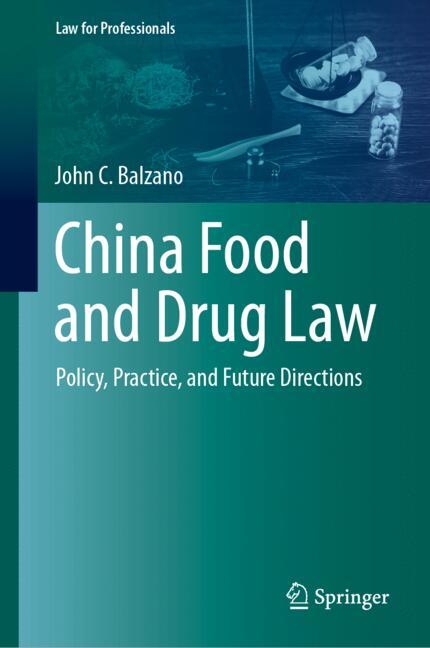
This book is an analysis of policy and law governing the development, approval, manufacture, distribution, marketing and post-market surveillance of human drugs, medical devices, foods and cosmetics in Mainland China ("China FDD Regulation").

It analyzes the policy and general principles behind China FDD Regulation, including the history and jurisdiction of the central and local agencies that administer the laws and regulations, the administrative law structure in which these agencies operate, and other aspects of FDD Regulation interpretation and enforcement. ?Although it describes practice in China, this book is written in the comparative perspective (i.e., sensitive to assumptions made by those who are steeped in FDD Regulation in the U.S., Japan, and the EU).

It includes one chapter on each regulatory space (drugs, medical devices, cosmetics, and food) organized by the lifecycle of products. It also covers subcategories of products, such as vaccines, radiopharmaceuticals, and in vitro diagnostic medical devices. The book includes specialty chapters on areas that are common to multiple types of regulated products, such as biosecurity and advertising.

It is the first English language book of its kind, and it can serve as a resource for those in the FDD law and regulatory field to understand the mechanics of developing and marketing products, but also with insights for businesspeople and others, who are developing China-strategies.


