본문 바로가기 주메뉴 바로가기
국회도서관 홈으로 정보검색 소장정보 검색

결과 내 검색

동의어 포함

목차보기


About the Authors
Acknowledgments
In Memoriam
PART 1: Understanding the Context
CHAPTER 1: Introduction
CHAPTER 2: Definitions
2:1 Key Definitions
2:2 Background
2:3 Operational Aspects of Federal Controls
2:4 Applying the SNF and RUG Measures
2:5 Federal and State Integration of Standards
2:6 Federal Funding Brings Control
2:7 Understanding the Integrated Elements of the Legal Structure
2:8 Interactions of Regulation with Tort Liability
2:9 Purposes of the Resident’s Nursing Home Stay
2:10 Significance of the Federal Funding Source Categories
2:11 Integration with Tort Liability
2:12 Political Aspects
CHAPTER 3: Identifying the Defendant Nursing Home Owner
3:1 Who Owns This Nursing Home?
3:2 How Has the Home Managed to Obtain a Profit?
3:3 Role of the Corporate Budget Official
3:4 Role of the Nursing Home Administrator
PART 2: Responsibilities of Professionals
CHAPTER 4: Roles and Liabilities of Nursing Professionals
4:1 Participants
4:2 Staffing Levels
4:3 Meeting Individual Patient Care Needs
4:4 Allocating Responsibilities
4:5 Professional Responsibility
CHAPTER 5: Roles and Liabilities of Physicians
5:1 Role of the Nursing Home Medical Director
5:2 Contractual Obligations
5:3 CMS Norms on Physician Obligations
5:4 Documentation of Decisions
5:5 Actual Supervision of Patient Care
5:6 Pharmaceutical Prescriptions
5:7 Role in Restraints
5:8 Malpractice Issues
5:9 Physician Duty and “Right to Die” Claims
CHAPTER 6:Supporting Staff and Their Roles
6:1 Consequences of Understaffing When Presented as a Cause of Harm
6:2 Dietary Support
6:3 Pharmacy Support
6:4 Laboratory Support
6:5 Rehabilitation
6:6 Documentation
6:7 The Role of Nursing Home Administration
6:8 Admissions
6:9 Accounting
6:10 Staff Training and Selection
6:11 Support Rules of Specialized Units
6:12 Illustrative Case
CHAPTER 7: Facility Safety Issues
7:1 Premises Safety Issues
7:2 Fire and Emergency Issues
7:3 Floods and Evacuations
7:4 Removal
7:5 Avoiding Preventable Errors
7:6 Facility Maintenance Issues
7:7 Stairway Accidents
CHAPTER 8: Liability for Neglect: Skin Ulcers and Infection Problems
8:1 Overview
8:2 Use of Clinical Practice Guidelines or CMS Guidelines as Evidence of the Standard of Care
8:3 Use of Regulatory Violations to Establish Negligence Per Se or as Evidence of the Standard of Care
8:4 Legal Issues
8:5 Dividing the Causes
8:6 Care Must Be Continuously Supervised
8:7 Record-Keeping Is Essential to Defense
8:8 Standard of Due Care
8:9 Short Staffing
8:10 Evidence
8:11 Defenses
8:12 Damages
8:13 Punitive Damages
8:14 Burns
8:15 Other Infection Concerns
8:16 Lessons from the Cases
8:17 Summary
CHAPTER 9: Fall-Related Injuries
9:1 Introduction
9:2 Resident Assessments by Nursing Homes
9:3 Measures to Avoid Fall Injuries
9:4 Resident Evaluation
9:5 Procedures and Documentation
9:6 Response to the Fall Event
9:7 Transportation Concerns
9:8 Fall Cases Are Not Simple
9:9 Legal Implications of Fall Injuries
9:10 Proving Nursing Home Negligence in the Fall Case
9:11 Assembling the Proof of Causation
9:12 Few Fall Cases Reach Appellate Levels
9:13 Evaluating Potential Litigation
9:14 Plaintiff’s Theory of the Case
9:15 Policies and Noncompliance
9:16 Examples of Fall Injury Cases
CHAPTER 10:Liability for Neglect: Wandering, Elopement, and Escape
10:1 Overview
10:2 Response When Residents Escape
10:3 Why Residents Wander
10:4 Safety versus Secure Buildings
10:5 Staff Responsibilities
10:6 Framing the Complaint
10:7 Lessons from the Cases
10:8 Summary
CHAPTER 11: Use of Resident Restraints
11:1 Overview
11:2 Restraints and Uses
11:3 Restraint-Injury Litigation
11:4 CMS and State Norms
11:5 FDA Hazard Alerts
11:6 Summary
CHAPTER 12: Assault and Abuse
12:1 Overview
12:2 Long-Term Care Ombudsmen Programs
12:3 Incidence of Abuse
12:4 Overview of Intentional Harm: Abuse by Caregivers
12:5 Overview of Neglect by Caregivers
12:6 Overview of Abuse by Other Residents and Nonemployee Third Parties
12:7 Criminal Aspects
12:8 Definitions
12:9 Sources of Assaults
12:10 Regulatory Duty of Care for Protection of Residents
12:11 Nursing Home Response to Assaults
12:12 Framing the Complaint for Civil Tort Liability
12:13 State Alternative Malpractice Remedies
12:14 Defending the Nursing Home’s Supervision
12:15 Rape and Sexual Assault
12:16 Effects of Shock and Public Outrage
12:17 Allegations of Concealment of the Assault
12:18 Allegations of Employee Hiring and Supervision Errors
12:19 CMS and State Penalties
12:20 Punitive Damages
12:21 Liability Insurance
12:22 Evidentiary Issues
12:23 Governmental Immunity
12:24 Effect of Resident Assault on Liability to Employees
CHAPTER 13: Pharmaceuticals
13:1 Overview
13:2 Medication Management
13:3 Inappropriate Use of Antipsychotic Medications
13:4 Adverse Drug Interactions
13:5 Polypharmacy
13:6 Overview of Relevant Litigation
13:7 What Drug-Related Problems Are Likely to Arise in Nursing Homes?
13:8 Shared Liability: Malpractice or Drug Problems?
13:9 Malpractice by Misprescribing
13:10 Risks of Negligent Polypharmacy
13:11 Overdosing of Pharmaceuticals
13:12 Negligent Misdelivery
13:13 Drugs as a Resident Restraint Option
13:14 Inattentive Medical Oversight
13:15 Medical Device Problems
CHAPTER 14: Food-Related Harms
14:1 Food-Related Litigation
14:2 Why Litigation Occurs
14:3 Types of Harm from Food
14:4 Chronic Risk: Weight Loss and Wasting
14:5 Lessons from the Cases
14:6 Acute Risk: Choking and Aspiration
14:7 Expert Testimony
14:8 Tube and Pump Feeding
14:9 Responsibility for Care and Feeding
14:10 Dehydration
14:11 Setting the Standard of Care
14:12 Evaluations of Resident Nutritional Needs
14:13 Assembling the Case
14:14 Baseline Evaluations
CHAPTER 15: Liability for Infections and Other Injuries
15:1 Overview of Nursing Home Infection Challenges
15:2 CMS Targets HAIs in New Initiatives
15:3 Importance of Metrics for Measurement of Infection Rates
15:4 Ongoing Survey and Certification Work Related to HAIs
15:5 Infection Issues
15:6 Bathing, Scalding, and Drowning
15:7 Insects
CHAPTER 16: Admission and Discharge
16:1 Overview
16:2 Rationale for Placing Resident in the Home
16:3 Economics of Admission Balancing
16:4 Admission Agreements and Brochures
16:5 Involuntary Discharge
16:7 Patient Movement within Nursing Homes
16:6 Appeal of Involuntary Discharge
CHAPTER 17: Assembling the Complaint
17:1 Overview
17:2 Elements of Knowledge
17:3 Elements of Due Care
17:4 Elements of Corporate Responsibility
17:5 Public Defendants
17:6 Statute of Limitations Defenses
17:7 False Claims Act Whistleblower Claims
17:8 Damages
17:9 Attorney Fee Requests
CHAPTER 18: Defendants
18:1 Overview
18:2 Interconnected Corporations
18:3 Deposing Corporate Representatives
18:4 Discovery of Defendant Identities
18:5 Doctors as Defendants
18:6 Products Liability
CHAPTER 19: Evaluating the Potential Plaintiff
19:1 Overview
19:2 Deterioration of Mental and Physical Condition
19:3 Testimony Issues
19:4 Peer Pressure
19:5 Actions after the Patient’s Death
19:6 State Wrongful Death Actions
19:7 Standing and Family Representation
19:8 Practical Issues
19:9 Effects of Death of the Plaintiff
19:10 Questions to Ask Potential Clients
CHAPTER 20: State Oversight and Regulation
20:1 Overview
20:2 State-Federal Funding
20:3 State Licensing
20:4 Ombudsman Roles
CHAPTER 21: Shared Facts, Multiple Defendants
21:1 Collective Responsibility and Group Coverage of Liability Insurance
21:2 Why Name Individual Defendants?
21:3 Nursing Liability
21:4 Physician Liability
21:5 Administrative Liability
21:6 Careful Use for State Corporation Law Research
21:7 The Role of Respondeat Superior Liabilities
CHAPTER 22: Witnesses
22:1 Overview
22:2 When Are Experts Needed?
22:3 Case Evaluation and Nontestifying Experts
22:4 Current Administrators
22:5 Current Medical and Nursing Staff
22:6 Former Staff Members
22:7 Support Staff
22:8 Preparation and Document Review
22:9 Daubert Effects
22:10 Fact Witnesses
22:11 Deposing Management and Supervisory Employees
22:12 Deposing the Corporate Representative
22:13 Testimony of the Patient
CHAPTER 23: Use of Regulatory Surveys of Nursing Homes
23:1 Use of Government Survey Findings
23:2 Utility of Survey Findings to Plaintiffs
23:3 Authentication and Admissibility
23:4 Penalties and Appeals
CHAPTER 24: Documentation: Needs and Sources
24:1 Overview
24:2 Assembly of Records for Expert Review
24:3 Effect of Alteration or Destruction of Records
24:4 Patient Privacy Issues
24:5 Mandatory Reports
24:6 Informed Consent
24:7 DNR and Advance Directives
24:8 Patient Care Plans
24:9 License and Survey Data Regarding the Nursing Home
24:10 Medicare Cost Reports
24:11 HHS Office of Inspector General Reports
CHAPTER 25: Product-Related Risk Issues
25:1 Overview
25:2 Assistive Devices
25:3 Medical Devices
25:4 Residential Products
25:5 Reporting Injuries to Government
CHAPTER 26: Causes of Action
26:1 Overview
26:2 Negligence
26:3 Use of Clinical Practice Guidelines or CMS Guidelines as Evidence of the Standard of Care
26:4 Negligence Per Se
26:5 Wrongful Death Statutes
26:6 Loss of Chance of Life
26:7 Statutory Causes of Action
26:8 Medical Malpractice
26:9 Intentional Torts
26:10 Wrongful Discharge of a Resident
26:11 Misrepresentation
26:12 False Claims Act
26:13 Infliction of Emotional Distress
26:14 Economic “Abuse” by Theft or Fraud
26:15 Breach of Contract
26:16 Class Actions
CHAPTER 27: Damages
27:1 Elders Tend to Have Low Economic Damages
27:2 Noneconomic Damages or “Specials”
27:3 Calculating Damages
27:4 Allocating Liability
27:5 Death Effects
27:6 Effects of Tort Reform
27:7 Punitive Damages
27:8 Statutory Damage Provisions
27:9 Caps as Deterrence to Litigation
27:10 Consequences of Large Awards for Medicaid Eligibility
CHAPTER 28: Defenses
28:1 Overview
28:2 Defenses Related to Residents
28:3 Defenses Related to Families
28:4 Defenses Related to Regulators
28:5 State Charitable Immunity
CHAPTER 29: Arbitration
29:1 Overview
29:2 The Case for Requiring Arbitration by Contract
29:3 Criticism of the Use of Arbitration
29:4 Costs and Award Limitations
29:5 Procedures
29:6 Defenses against Arbitration
CHAPTER 30: Motion Practice
30:1 Discovery Motions
30:2 Failure to State a Claim
30:3 Summary Judgment
30:4 Removal to Federal Court
30:5 Motions after Verdict30:6 Remittitur
CHAPTER 31: Trial Procedure Issues
31:1 Voir Dire—The “Ideal” Juror
31:2 Presentations and Demonstrative Evidence
31:3 Decisions on Evidence
31:4 Impeachment and Response
CHAPTER 32: Insurance
32:1 Coverage of Nursing Home Liability Cases
32:2 Settlement Authority at “Policy Limits”
32:3 Bad-Faith Litigation
32:4 Beneficial Role of Insurers
CHAPTER 33: Verdicts and Settlements
33:1 Overview
33:2 Settlement Influences
33:3 Effects of Settlement and Release
33:4 Verdicts Allocating Percentage Fault
33:5 Special Verdicts and Interrogatories
33:6 Verdicts against Individual Actors
33:7 Partial Settlements with Selected Defendants
33:8 Releases of Selected Defendants
33:9 Threats of Bankruptcy
CHAPTER 34: After-Verdict Liens and Offsets
34:1 Subrogation and the Effect of Repayment of Liens
34:2 Specific Steps for the Prudent Plaintiff’s Counsel
34:3 Informing the Client Early
34:4 Continued Eligibility34:5 Payment of Private Insurer Liens
Table of Cases
Index

출판사 책소개

The United States has more than 15,000 nursing homes serving more than 1.2 million people. Many of those residents suffer from serious medical or cognitive issues, leaving them especially susceptible to harm. Nursing home litigation is an ever-growing area of law, and settlements and verdicts can reach the millions of dollars on behalf of injured residents and their loved ones.

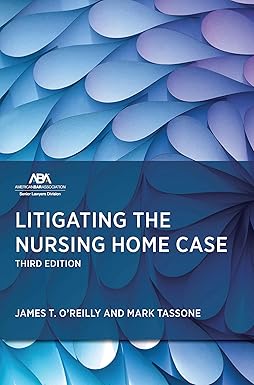
Litigating the Nursing Home Case, Third Edition, guides practitioners through the many decisions and challenges of bringing a nursing home case. This book addresses such questions as:

What is the motivation for corporations to enter the nursing home industry?

Why do abuse and neglect occur in nursing homes?

How can abuse and neglect be recognized?

What are potential causes of action?

What are likely defenses to claims against nursing homes?

Who should be named as defendants?

How is the Centers for Medicare and Medicaid Services involved?


provided by publisher

이용현황보기

Litigating the nursing home case 이용현황 표 - 등록번호, 청구기호, 권별정보, 자료실, 이용여부로 구성 되어있습니다.
등록번호 청구기호 권별정보 자료실 이용여부
0003215388 LM 344.7303216 -A25-1 서울관 법률정보센터(206호) 북큐레이션
(자료실내 이용)

출판사 책소개

알라딘제공

The essential nursing home litigation resource for lawyers.

The United States has more than 15,000 nursing homes serving more than 1.2 million people. Many of those residents suffer from serious medical or cognitive issues, leaving them especially susceptible to harm. Nursing home litigation is an ever-growing area of law, and settlements and verdicts can reach millions of dollars on behalf of injured residents and their loved ones.

Litigating the Nursing Home Case, Third Edition, guides practitioners through the many decisions and challenges of bringing a nursing home case. This book addresses such questions as:

  • What is the motivation for corporations to enter the nursing home industry?
  • Why do abuse and neglect occur in nursing homes?
  • How can abuse and neglect be recognized?
  • What are potential causes of action?
  • What are likely defenses to claims against nursing homes?
  • Who should be named as defendants?
  • How is the Centers for Medicare and Medicaid Services involved?

Providing step-by-step guidance for both plaintiff and defense lawyers, the handbook also speaks to nursing home administrators on how to avoid liability and improve quality through regulatory compliance.


