
 대표어
대표어
 https://collections.unu.edu/view/UNU:10445


권호기사보기
| 기사명 | 저자명 | 페이지 | 원문 | 기사목차 |
|---|
결과 내 검색
동의어 포함
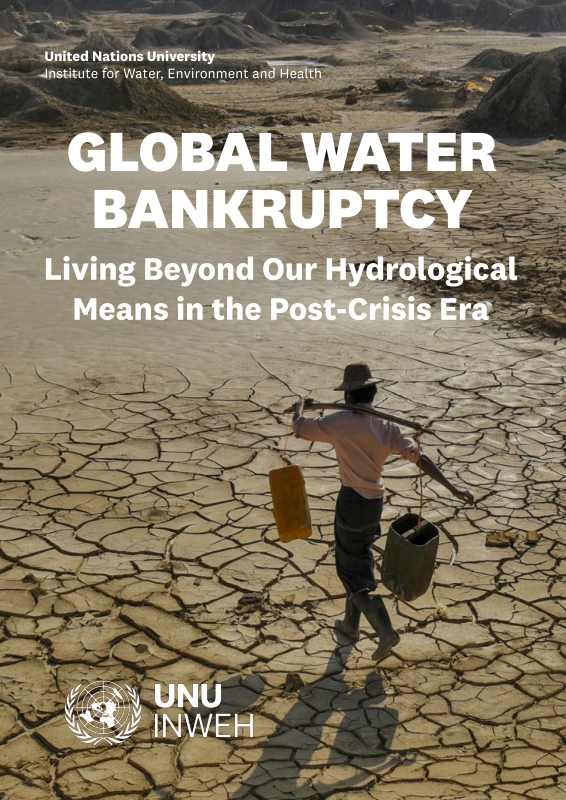
Title page 1
Contents 7
FOREWORD 6
GLOBAL WATER BANKRUPTCY IN BRIEF 10
EXECUTIVE SUMMARY 12
KEY POLICY MESSAGES 15
CHAPTER 1. FROM WATER CRISIS TO WATER BANKRUPTCY 17
1.1. Water at the Core of the Global Agenda 18
1.2. The Crisis Narrative: Useful But No Longer Sufficient 19
1.3. The Water Reality of the Anthropocene 20
1.4. From Warning to Diagnosis: Declaring Global Water Bankruptcy 21
1.5. Purpose, Scope and Audience of the Report 22
CHAPTER 2. THE POST-CRISIS ERA: WHEN THE SYSTEM NO LONGER REBOUNDS 23
2.1. New Normals 24
2.2. Shrinking Lakes, Altered Rivers and Degrading Wetlands 25
2.3. Groundwater Depletion, Land Subsidence, and Salinization 28
2.4. Cryosphere Loss 30
2.5. Threatened Food Systems and Livelihoods 32
2.6. Anthropogenic Droughts and Chronic Water Scarcity 33
2.7. Degrading Water Quality and Shrinking Usable Supply 35
2.8. Planetary Boundaries, Tipping Points, and Irreversibility 37
CHAPTER 3. WATER BANKRUPTCY IN THE ANTHROPOCENE 38
3.1. A New Term for a New Discourse 39
3.2. Conceptual Foundations 40
3.3. From Anthropogenic Drought to Water Bankruptcy 41
3.4. A Formal Definition of Water Bankruptcy 42
3.5. Distinguishing Water Stress, Water Crisis, and Water Bankruptcy 43
3.6. Pathways into Water Bankruptcy 44
3.7. Implications for Monitoring and Diagnosis 45
3.8. Protecting Water as a Natural Capital: Product Versus Process 46
CHAPTER 4. GOVERNING GLOBAL WATER BANKRUPTCY 47
4.1. From Crisis Management to Bankruptcy Management 48
4.2. Core Principles for Governing Water-Bankrupt Systems 49
4.3. Recognizing Insolvency, Acknowledging Irreversibility, and Declaring Water Bankruptcy 50
4.4. Rebalancing Demand and Reconfiguring Uses 51
4.5. Restructuring Rights, Claims and Institutions 54
4.6. Reorienting Infrastructure, Technology, Finance and Trade 55
4.7. From Crisis Management to Bankruptcy Management 56
CHAPTER 5. THE WAY FORWARD-A NEW WATER AGENDA TO UNITE IN A FRAGMENTED WORLD 58
5.1. Resetting the Global Water Agenda 59
5.2. From Local Symptom to Global Condition 60
5.3. Elevating Global Water Bankruptcy in the UN system and Rio Conventions 61
5.4. Water as a Bridge Between Fractured Societies and a Fragmented World 63
5.5. The Upcoming UN Water Conferences in 2026 and 2028 64
5.6. Conclusion-A New Water Agenda for the Anthropocene 66
REFERENCES 67
MEDIA HIGHLIGHTS 70
Figures 9
Figure 1. Baseline vulnerability of different nations to water-related challenges 18
Figure 2. Annual number of water-related conflicts worldwide 21
Figure 3. Global land and ocean temperature anomalies 24
Figure 4. Global human exposure to wildfire 27
Figure 5. Regional trends in water storage in the twenty-first century 28
Figure 6. Reported land subsidence rates and drivers across the globe 29
Figure 7. Projected changes in the likelihood of future floods and droughts under climate change 31
Figure 8. Agricultural water withdrawals as a share of total water withdrawals 32
Figure 9. Overall water risk across different regions around the world 33
Figure 10. State of access to safe drinking water and improved sanitation services around the world 35
Figure 11. State of surface water quality across the world 36
Figure 12. Three states of concern in human-water systems 39
Figure 13. Water income, assets, and expenses in human-water systems 40
Figure 14. Total global freshwater withdrawals over time 41
Figure 15. Land subsidence rates in coastal cities of the world 44
Figure 16. Total global agricultural area over time 51
*표시는 필수 입력사항입니다.
| 전화번호 |
|---|
| 기사명 | 저자명 | 페이지 | 원문 | 기사목차 |
|---|
| 번호 | 발행일자 | 권호명 | 제본정보 | 자료실 | 원문 | 신청 페이지 |
|---|
도서위치안내: / 서가번호:

우편복사 목록담기를 완료하였습니다.
*표시는 필수 입력사항입니다.
저장 되었습니다.
