Foreword xvii Healthcare Delivery & Innovation 2025 Planning Committee xix Chapter 1 Entrepreneurial Medicine: Fraud and Abuse Risk Areas for Physician Business Relationships 1 By: Clay J. Countryman, J.D., and Violet Anderson, J.D. I. Introduction 1 II. Federal Fraud and Abuse Laws 1 A. The Federal Anti-Kickback Statute 2 1. Exceptions and Safe Harbors to the Anti-Kickback Statute 2 a. Exceptions to the Anti-Kickback Statute 2 b. Safe Harbors to the Anti-Kickback Statute 3 2. OIG Special Fraud Alerts, Bulletins, and Other Guidance Involving Physicians 5 a. OIG General Compliance Program Guidance 5 b. OIG Updated Compliance Program Guidance for Skilled Nursing Facilities 5 c. OIG Special Fraud Alert: Suspect Payments in Marketing Arrangements Related to Medicare Advantage and Providers 6 d. OIG Special Fraud Alert: Practitioners to Exercise Caution When Entering Into Arrangements With Purported Telemedicine Companies 7 e. OIG Special Fraud Alert: Speaker Programs 8 f. OIG General Policy Statement Regarding Gifts of Nominal Value to Medicare and Medicaid Beneficiaries 11 g. 2015 OIG Fraud Alert: Physician Compensation Arrangements May Result in Significant Liability 11 h. 2014 OIG Special Fraud Alert Regarding Laboratory Payments to Referring Physicians 12 3. Safe Harbors to the Anti-Kickback Statute for Value-Based Arrangements and Other Areas 13 B. The False Claims Act 15 1. Whistleblower Actions Under the FCA 15 2. Examples of Potential False Claims for Items and Services 16 3. Penalties for Violation of the FCA 16 4. The 60-Day Overpayment Report and Refund Obligation 16 C. The Stark Law 17 1. Scope of the Stark Law Physician Self-Referral Prohibition 18 2. Examples of Physician Relationships Subject to the Stark Law 19 3. Penalties for Stark Law Violations 20 4. Exceptions to the Stark Law Physician Self-Referral Prohibition 20 5. Differences Between Stark Law and the Federal Anti-Kickback Statute 21 6. Stark Law and Hospital Ownership 21 7. Stark Law Changes and Clarifications 22 a. Stark Law Compensation Exceptions 23 b. Changes Affecting Physician Group Compensation 23 8. Stark Law Statutory Exceptions and Anti-Kickback Statute Safe Harbors for Physician Wellness Programs 24 9. Stark Law Self-Referral Disclosure Protocol 24 D. The Civil Monetary Penalties Law 24 1. Civil Monetary Penalties Law—False or Fraudulent Claims 24 2. Examples of CMPL Settlements Involving Physicians 26 E. Exclusion Authorities 31 1. Mandatory Exclusion 31 2. Permissive Exclusion 32 3. Exclusion Liability 32 4. OIG Guidance on Permissive Exclusion 33 E Eliminating Kickbacks in Recovery Act of 2018 (EKRA) 34 III. Fraud Risk Areas with Physician Business Relationships 35 A. Physician Employment and Professional Service Agreements 35 1. Employment Relationship 35 2. Fraud and Abuse Concerns 36 3. Compliance Recommendations 38 a. Exceptions and Safe Harbors to the Anti-Kickback Statute for Employing Physicians and Contracting for Professional Services 38 b. Stark Law Exceptions Related to Compensation Arrangements 38 4. Settlements Based on Compensation by Physician Practices to Owner and Employed Physicians 39 5. Cases, Settlements and OIG Advisory Opinions Based on Compensation by Hospitals and Health Systems to Employed or Contracted Physicians 40 B. Payments to Physicians for Other Than Professional Services 47 1. General Description and Compliance Recommendations 47 2. Enforcement Actions and Settlements 47 C. Jointventures 51 1. General Description 51 2. General Compliance Recommendations 52 3. Recent Enforcement Actions, Settlements and OIG Advisory Opinions Involving Physician Jointventures 52 D. Service Line Co-Management Arrangements 56 1. General Description 56 a. Structures of Service Line Co-Management Agreements 56 b. Services and Compensation 57 2. Fraud and Abuse Concerns 57 3. Compliance Issues and Recent Guidance 58 a. Co-Management Services and Compensation 58 b. Concerns under the Civil Monetary Penalties Law.59 c. The Federal Anti-Kickback Statute 60 4. General Recommendations to Address Fraud and Abuse Concerns 60 E. Gainsharing Arrangements 61 F. Medical Directorships 62 1. General Description 62 2. Fraud and Abuse Concerns 62 3. Compliance Guidance and General Recommendations 64 a. Anti-Kickback Safe Harbors 64 b. Stark Law Exceptions 64 c. General Recommendations 65 4. Recent Cases and Settlements Involving Medical Director Agreements 66 G. Free or Discounted Items and Services 67 1. General Description 67 2. Fraud and Abuse Concerns 67 3. Recent Guidance 67 a. Free Insurance Pre-Authorization Services 67 b. Free Continuing Education Programs 68 c. Hospital Provision of Staff to Assist Physician Groups 68 4. Recent Settlements and Voluntary Self-Disclosures 69 H. Call Coverage Agreements 69 1. General Relationship 69 2. Fraud and Abuse Concerns 70 a. Anti-Kickback Concerns 70 b. Stark Law Concerns 70 3. Guidance Involving Call Coverage Agreements 71 I. FCA Cases Based on Physicians Providing Medically Unnecessary Services 72 J. Recent Settlements Related to Physician Billing 72 IV. Concierge Medicine 74 A. General Description 74 B. Concierge Medicine vs. Direct Primary Care 74 C. Compliance Concerns 75 1. General Description 75 D. Compliance Issues and Recent Government Guidance 75 1. Private Payor Compliance Issues 76 2. Recent Civil Monetary Penalty Settlements 76 V. Physician-Owned Medical Device Distributorships 'll A. Fraud and Abuse Concerns 77 B. OIG Special Fraud Alert: Physician-Owned Entities 77 C. Cases, Settlements, and Advisory Opinions Involving Medical Device Companies 78 VI. Fraud and Abuse Risks with Electronic Health Records Arrangements and Electronic Health Record Billing Arrangements 80 A. Fraud and Abuse Concerns with Electronic Health Record (EHR)Arrangements and Vendors 80 B. Stark Law and Applicable Exceptions 81 I. EHR Exception 81 2. Electronic Prescribing Exception 82 3. Community-Wide Health Information Exception 83 4. The Cybersecurity Technology and Related Services Exception 84 C. Anti-Kickback Statute 84 D. Recent Government Settlements, Advisory Opinions and Guidance 85 1. Recent Settlements Involving EHR Systems 85 2. OIG Advisory Opinion 12-20 Free Access to an Electronic Interface to Physicians 86 3. CMS Stark Law Advisory Opinion 2008-01 86 4. OIG Alert—Information Blocking and the Federal Anti-Kickback Statute 87 5. Information Blocking Final Rule 87 E. EHR Billing Concerns 88 1. General Description 88 2. Compliance Concerns 88 3. Compliance Issues and Recent Government Guidance 89 a. Upcoding and Cloning 89 b. OIG Concerns 89 c. OIG 2017 Audit Report on Payment of Meaningful Use Incentive Payments 90 d. Medicare Contractor Warnings 90 Chapter 2 Evolving Trends in Physician-Hospital Contracting: Integration, Relationships, and Collaborations Toward Accountable Care 93 By: Logan J. Moore, J.D. Previous Update By: Violet M. Anderson, J.D., Hilary H. Bowman, J.D., Kelsey U. Jernigan, J.D., Gabriel Scott, J.D. I. Introduction 93 II. Growth of Private Equity in Healthcare 95 III. Continued Growth of Value-Based Care 96 IV. Continued Growth of Telehealth 98 V. Ethical Issues in Physician Employment 99 A. Conflicts of Interest 100 B. Advocacy for Patients and the Profession 100 C. Contracting 101 D. Hospital Medical Staff Relations 101 E. Peer Review and Performance Evaluations 102 F. Payment Agreements 103 VI. Reviewing Physician Contractual Agreements 104 A. Job Duties and Responsibilities 104 B. Qualifications for Employment 104 C. Professional Liability Insurance 105 D. Employee Benefits 105 E. Term and Termination 105 Chapter 3 Medical Professional Liability: Trends in Claims and Legislative Responses 107 By: Michael C. Stinson Introduction 107 Part A—Medical Professional Liability Claims Trends 108 Introduction to the Data Sharing Project 108 Data Sharing Project Data: Claims Analysis 108 Claim Details 109 Trend Analysis of Claims by Close of Year 109 Comparative Payment Analysis by Close Year 110 Comparative Payment Threshold Analysis by Specialty Ill Comparative Total Expense Payments by Specialty 113 Claims by Adjudication Status 114 Summary 114 PART B—Medical Professional Liability Legislative Trends 116 State Reforms 117 Supplemental Reforms 120 Alternative Reforms 122 The Future of State Reforms 124 Federal Reforms 125 Traditional Reforms 125 Additional Reforms 125 Targeted Reforms 126 The Future of Federal Reforms 128 Summary 129 Conclusion 129 Chapter 4 Telehealth 131 By: Jeremy Sherer, J.D., LL.M., and Amy Joseph, J.D. I. Introduction: What Is Telehealth? Is It Different from Telemedicine? 131 A. COVID-19 131 B. Telehealth versus Telemedicine 132 C. Telehealth Modalities 132 D. Online Questionnaires 133 II. State-Specific Regulatory Issues 135 A. Licensure 135 B. Licensure Exceptions 136 C. Interstate Licensure Compacts 137 D. Establishing a Physician-Patient Relationship 139 E. Patient Consent 140 F. Patient and Provider Verification/Validation 141 G. Medical Records and Patient Privacy 142 H. Remote Prescribing 142 1. Federal Law Pre-Pandemic 143 2. Temporary Changes During the Pandemic 145 3. Proposed Permanent Flexibilities 145 III. Reimbursement 148 A. Medicare Reimbursement 148 B. Telehealth Beyond “Medicare Telehealth Services” 153 C. Medicaid Reimbursement 155 D. Private Payers 156 E. Cash Pay 157 IV. Fraud and Abuse Issues Unique to Telehealth 158 A. Federal Kickback and Beneficiary Inducement Restrictions 158 B. Federal Self-Referral Prohibition 165 C. Value-Based AKS Safe Harbors and Stark Exceptions 166 D. False Claims Act and Civil Monetary Penalties 167 E. State Fraud and Abuse Laws 170 F. Corporate Practice of Medicine and Fee-Splitting 171 V. Miscellaneous 173 A. Proxy Credentialing 173 B. Malpractice Insurance 174 Chapter 5 HIPAA Compliance: Privacy, Security and Breach Obligations 175 By: Tammy Ward Woffenden and Ashley Wheelock Evolution of HIPAA 175 Application of HIPAA to Physicians 176 The HIPAA Privacy Rule 177 Individual Rights Established by the Privacy Rule 177 Use and Disclosure of PHI—Individual Authorizations 180 Uses and Disclosures—Without Authorization 181 Disclosures to Business Associates 183 Minimum Necessary Requirement and Limited Data Sets 184 Other Administrative Requirements 185 The HIPAA Security Rule 185 Breach Notification Rule 188 HIPAA Enforcement 191 Other Legal Developments 204 Chapter 6 Accountable Care Organizations—Overview 207 Update by: Kenya S. Woodruff and Joe Lecroy I. What Are ACOs? 207 A. History and Background 207 B. The Affordable Care Act 208 IL The Center for Medicare and Medicaid Innovation and Current ACO Models 215 A. The Center for Medicare and Medicaid Innovation 215 B. ACO Models 215 1. Medicare Shared Savings Program (MSSP) ACO Models (BASIC and ENHANCED Tracks) 216 2. Pioneer ACO Model 226 3. ACO Investment Model (AIM) 229 4. The Next Generation ACO Model 230 5. The Comprehensive ESRD Care (CEC) Model 232 6. The New ACO REACH Model 234 7. The Kidney Care Choices Model 236 8. The ACO Primary Care Flex Model 236 III. Legal Issues 237 A. Antitrust 237 B. Anti-Kickback Statute/Stark/Gainsharing Civil Monetary Penalty Waivers 238 1. Brief Description of the Anti-Kickback/Stark/ Gainsharing Civil Monetary Penalty Laws 238 2. The CMS, FTC, and OIG Workshop, and Subsequent Waivers of Applicability of the Anti-Kickback, Stark, and Gainsharing CMP Laws to MSSP ACOs 240 C. The Anti-Kickback Safe Harbors and Stark Exceptions 245 D. Tax-Exempt Status 248 E. State Insurance Laws 251 IV. Practical Issues 251 A. Who Are Memb
이용현황보기
Physician law : evolving trends & hot topics 2025 이용현황 표 - 등록번호, 청구기호, 권별정보, 자료실, 이용여부로 구성 되어있습니다.
등록번호
청구기호
권별정보
자료실
이용여부
0003282548
LM 344.73041 -A26-2
서울관 법률정보센터(206호)
북큐레이션 (자료실내 이용)
출판사 책소개
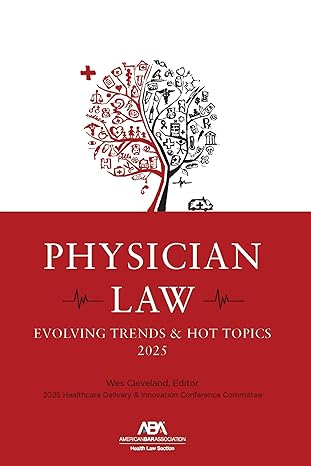
This book represents the cutting edge of physician law. The publication emanates from the American Bar Association Health Law Section's 2025 Healthcare Delivery and Innovation Conference. The conference and Physician Law: Evolving Trends & Hot Topics have been produced in conjunction with the Chicago Medical Society and the American Medical Association, tailored to an audience including physicians, lawyers, healthcare administrators, and other healthcare business people.
The book includes ten peer-reviewed chapters on core physician-centric legal topics:
Entrepreneurial Medicine (including fraud and abuse risk areas)
Physician-Hospital Contracting
Medical Professional Liability
Telemedicine
HIPAA Compliance
Accountable Care Organizations
Doctors' Defense in Medical Staff Hearings and Appeals
Physician Well-Being
Medicare and Medicaid Contractors
Physician Employment Contracts from the Physician Perspective.

 대표어
대표어