
 대표어
대표어
 https://openknowledge.worldbank.org/entities/publication/ef621012-950b-48e1-954c-f636a76220b8
권호기사보기
| 기사명 | 저자명 | 페이지 | 원문 | 기사목차 |
|---|
결과 내 검색
동의어 포함
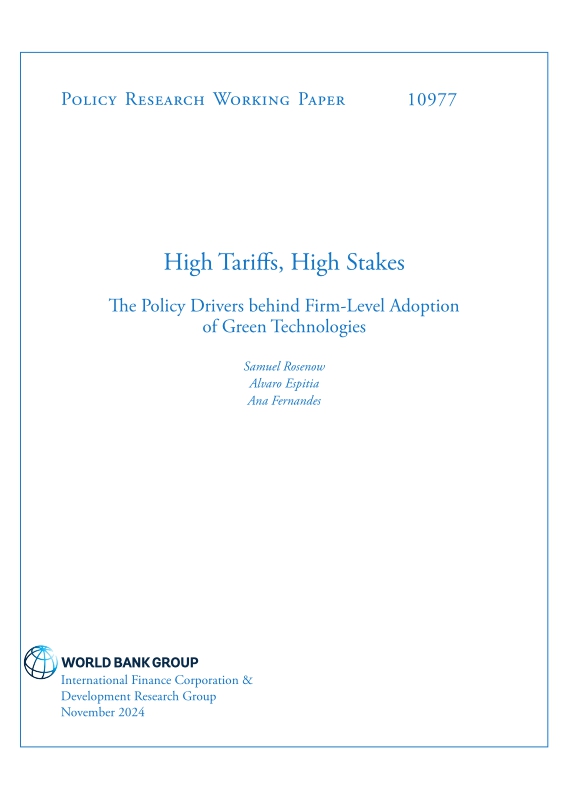
Title page 1
Contents 1
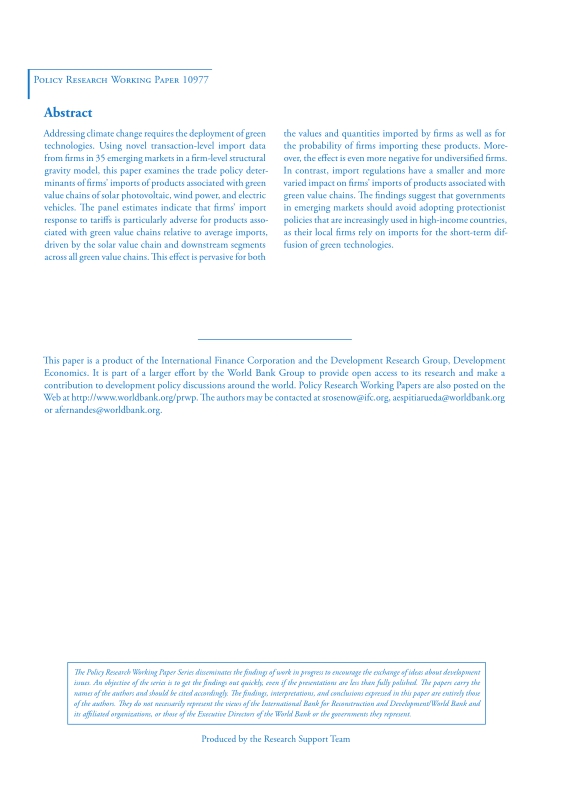
Abstract 2
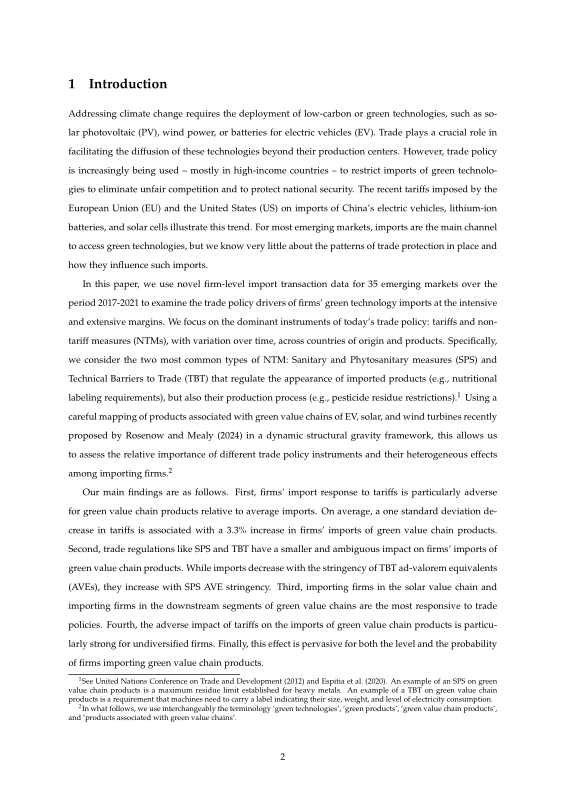
1. Introduction 4
2. Conceptual Discussion 6
3. Data 7
3.1. Firm-Level Customs Transaction Data 7
3.2. Green Value Chains Data 9
3.3. Tariff Data 9
3.4. NTM Data 9
4. Stylized Facts 10
5. Empirical Methodology 12
6. Results 14
6.1. Intensive Margin of Imports: Baseline Results 14
6.2. Intensive Margin of Imports: Robustness Results 17
6.3. Intensive Margin of Imports: Heterogeneity Results 19
6.4. Extensive Margin of Imports: Baseline Results 19
6.5. Extensive Margin of Imports: Heterogeneity Results 20
6.6. Extensive Margin of Imports: Robustness Results 20
7. Conclusion 21
References 35
Appendix 39
A. Data and Stylized facts 39
B. Robustness Checks - Intensive margin 45
C. Robustness Checks - Extensive margin 53
D. Intensive Margin of Firm-level Imports - Results by Region 60
E. Extensive Margin of Firm-level Imports - Results by Region 66
Tables 26
Table 1. Summary Statistics 26
Table 2. Intensive Margin of Firm-level Imports - Baseline Results 27
Table 3. Intensive Margin of Firm-level Imports - Heterogeneous Effects of India 28
Table 4. Intensive Margin of Firm-level Imports - Heterogeneous Effects of Green Products 29
Table 5. Intensive Margin of Firm-level Imports - Margins of Imports 30
Table 6. Intensive Margin of Firm-level Imports - Heterogeneous Effects of Single-Product Firm 31
Table 7. Extensive Margin of Firm-level Imports - Baseline Results 32
Table 8. Extensive Margin of Firm-level Imports - India Interaction 33
Table 9. Extensive Margin of Firm-level Imports - Heterogeneous Effects of Single-Product Firm 34
Figures 22
Figure 1. Evolution of Firm-level Outcome Variables, averages by Country, Value Chain, and Year 22
Figure 2. Evolution of Tariffs, by product group and year 23
Figure 3. Tariffs and Advalorem Equivalents (AVEs) of Sanitary and Phytosanitary (SPS) and Technical Barriers to Trade (TBT), by Value Chain and Segment 24
Figure 4. Outcome Variables vs. Tariffs 25
Appendix Tables 39
Table A1. Country Coverage 39
Table A2. Description of Value Chain Segments and Examples 40
Table A3. Number of HS 2017 6-digit products, by value chain and segment 40
Table A4. Summary Statistics including India 41
Table A5. Intensive Margin of Firm-level Imports - Heterogeneous Effects of Green Products - By Segment 42
Table A6. Two-sample t-test with equal variances - share of homogeneous products at the HS 4-digit subsector 43
Table A7. Two-sample t-test with equal variances - share of intermediate products at the HS 4-digit subsectors 43
Table B1. Intensive Margin of Firm-level Imports - Excluding negative AVE NTMs 45
Table B2. Intensive Margin of Firm-level Imports - Standard Errors Clustered at firm level 46
Table B3. Intensive Margin of Firm-level Imports - Bootstrapped Standard Errors 47
Table B4. Intensive Margin of Firm-level Imports - Count variables for SPS and TBT measures 48
Table B5. Intensive Margin of Firm-level Imports - Indicator variables for SPS and TBT measures 49
Table B6. Intensive Margin of Firm-level Imports - SPS and TBT AVEs set to zero if their count variables equals zero 50
Table B7. Control Function Estimates 51
Table B8. Intensive Margin of Firm-level Imports - Controlling for Inverse Mills Ratio 52
Table C1. Extensive Margin of Firm-level Imports - Excluding negative AVE NTMs 53
Table C2. Extensive Margin of Firm-level Imports - Standard Errors Clustered at Firm Level 54
Table C3. Extensive Margin of Firm-level Imports - Bootstrapped Standard Errors 55
Table C4. Extensive Margin of Firm-level Imports - Count variables for SPS and TBT measures 56
Table C5. Extensive Margin of Firm-level Imports - Indicator variables for SPS and TBT measures 57
Table C6. Extensive Margin of Firm-level Imports - AVEs equal to zero if count equal zero 58
Table C7. Extensive Margin of Firm-level Imports - Controlling for Inverse Mills Ratio 59
Table D1. Intensive Margin of Firm-level Imports - By region 60
Table D2. Intensive Margin of Firm-level Imports - East Asia and Pacific 61
Table D3. Intensive Margin of Firm-level Imports - Europe and Central Asia 62
Table D4. Intensive Margin of Firm-level Imports - Latin America and the Caribbean 63
Table D5. Intensive Margin of Firm-level Imports - South Asia 64
Table D6. Intensive Margin of Firm-level Imports - Sub-Saharan Africa 65
Table E1. Extensive Margin of Firm-level Imports - By region 66
Table E2. Extensive Margin of Firm-level Imports - East Asia and Pacific 67
Table E3. Extensive Margin of Firm-level Imports - Europe and Central Asia 68
Table E4. Extensive Margin of Firm-level Imports - Latin America and the Caribbean 69
Table E5. Extensive Margin of Firm-level Imports - South Asia 70
Table E6. Extensive Margin of Firm-level Imports - Sub-Saharan Africa 71
Appendix Figures 43
Figure A1. Green Value Chain Imports as a Share of Total Imports, 2017 and 2021 43
Figure A2. Firm-Level Import Diversification, 2017 vs. 2021 44
Figure A3. Evolution of Tariffs over Time by Green Value Chain, Top-10 Countries 44
*표시는 필수 입력사항입니다.
| 전화번호 |
|---|
| 기사명 | 저자명 | 페이지 | 원문 | 기사목차 |
|---|
| 번호 | 발행일자 | 권호명 | 제본정보 | 자료실 | 원문 | 신청 페이지 |
|---|
도서위치안내: / 서가번호:

우편복사 목록담기를 완료하였습니다.
*표시는 필수 입력사항입니다.
저장 되었습니다.
