
 대표어
대표어
 https://www.iai.it/en/pubblicazioni/c03/wired-resilience-transatlantic-approaches-semiconductor-supply-chain-security
권호기사보기
| 기사명 | 저자명 | 페이지 | 원문 | 기사목차 |
|---|
결과 내 검색
동의어 포함
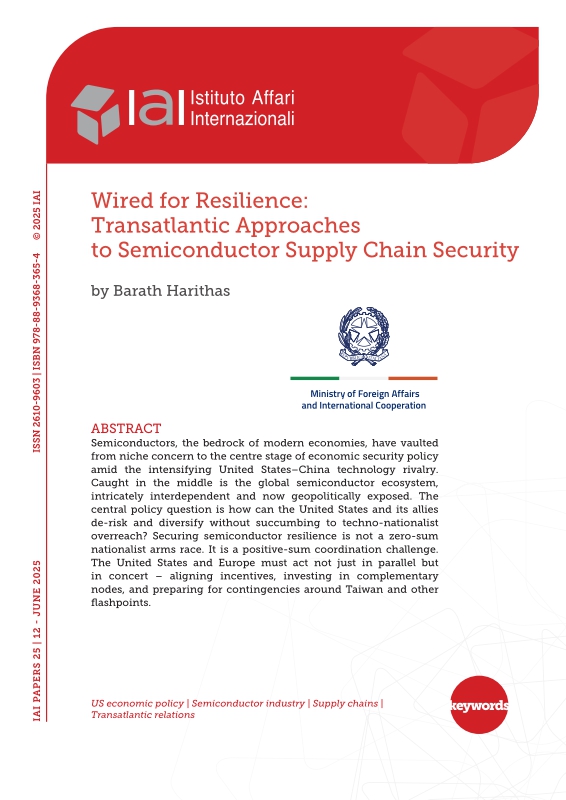
Title page 1
Contents 1
Abstract 1
Introduction 2
1. Mapping the semiconductor supply chain: Advanced vs legacy chips 4
1.1. Design and IP: The United States' edge 5
1.2. Fabrication: Differs by node 5
1.3. Equipment and materials: Transatlantic and allied strength 6
1.4. Strategic takeaways 6
2. The US semiconductor resilience strategy: The sword and the shield 7
2.1. The CHIPS Act: Big money, big bets 7
2.2. Beyond the giants: Tacking the legacy chips problem 8
2.3. Export controls: Buying time by kneecapping rivals 9
2.4. Trade enforcement: Tariffs and Section 232/301 hammer 10
2.5. Gaps, risks and the Trump factor 10
3. Transatlantic semiconductor cooperation: What's realistic, what's necessary 11
3.1. Aligning incentives without fighting over the same fabs 11
3.2. Keeping the export controls front aligned 12
3.3. Crisis coordination: Early warning, not empty summits 13
3.4. Joint R&D and standards: Quiet wins, not grandiose pledges 13
3.5. Co-investment mechanisms: A semiconductor venture fund 14
3.6. Practical recommendations 14
4. Conclusion: A resilience architecture for an uncertain era 14
References 16
*표시는 필수 입력사항입니다.
| 전화번호 |
|---|
| 기사명 | 저자명 | 페이지 | 원문 | 기사목차 |
|---|
| 번호 | 발행일자 | 권호명 | 제본정보 | 자료실 | 원문 | 신청 페이지 |
|---|
도서위치안내: / 서가번호:

우편복사 목록담기를 완료하였습니다.
*표시는 필수 입력사항입니다.
저장 되었습니다.
