
 대표어
대표어
 https://www.gov.uk/government/publications/ai-adoption-research
권호기사보기
| 기사명 | 저자명 | 페이지 | 원문 | 기사목차 |
|---|
결과 내 검색
동의어 포함
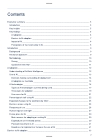
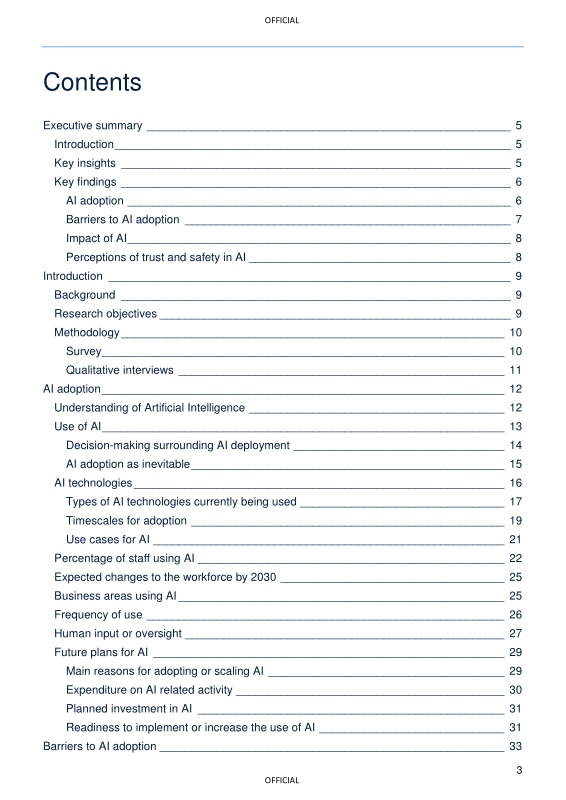
Title page 1
Contents 2
Executive summary 4
Introduction 4
Key insights 4
Key findings 5
AI adoption 5
Barriers to AI adoption 6
Impact of AI 7
Perceptions of trust and safety in AI 7
Introduction 8
Background 8
Research objectives 8
Methodology 9
Survey 9
Qualitative interviews 10
AI adoption 11
Understanding of Artificial Intelligence 11
Use of AI 12
Decision-making surrounding AI deployment 13
AI adoption as inevitable 14
AI technologies 15
Types of AI technologies currently being used 16
Timescales for adoption 18
Use cases for AI 20
Percentage of staff using AI 21
Expected changes to the workforce by 2030 24
Business areas using AI 24
Frequency of use 25
Human input or oversight 26
Future plans for AI 28
Main reasons for adopting or scaling AI 28
Expenditure on AI related activity 29
Planned investment in AI 30
Readiness to implement or increase the use of AI 30
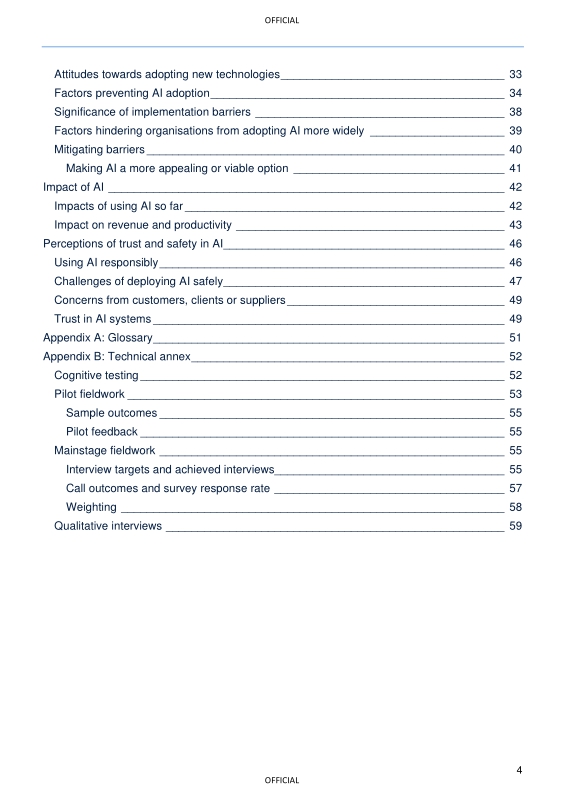
Barriers to AI adoption 32
Attitudes towards adopting new technologies 32
Factors preventing AI adoption 33
Significance of implementation barriers 37
Factors hindering organisations from adopting AI more widely 38
Mitigating barriers 39
Making AI a more appealing or viable option 40
Impact of AI 41
Impacts of using AI so far 41
Impact on revenue and productivity 42
Perceptions of trust and safety in AI 45
Using AI responsibly 45
Challenges of deploying AI safely 46
Concerns from customers, clients or suppliers 48
Trust in AI systems 48
Appendix A: Glossary 50
Appendix B: Technical annex 51
Cognitive testing 51
Pilot fieldwork 52
Sample outcomes 54
Pilot feedback 54
Mainstage fieldwork 54
Interview targets and achieved interviews 54
Call outcomes and survey response rate 56
Weighting 57
Qualitative interviews 58
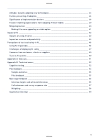
Tables 51
Table 1. Profile of businesses by size 51
Table 2. Profile of businesses by sector and use of AI 52
Table 3. Profile of businesses by size 53
Table 4. Profile of businesses by sector and use of AI 53
Table 5. Call outcomes for pilot fieldwork 54
Table 6. Interview targets 55
Table 7. Achieved interviews by size and sector (survey) 56
Table 8. Call outcomes for mainstage fieldwork 57
Table 9. Weighted and unweighted counts - by sector and size 58
Table 10. Achieved interviews by size and sector (qualitative interviews) 59
Figures 12
Figure 1. AI adoption status 12
Figure 2. Length of time considering AI before deploying 13
Figure 3. Plans for using each type of AI technology 15
Figure 4. AI technologies currently used among adopters 17
Figure 5. How businesses adopted each AI technology among current users 17
Figure 6. Duration of use of AI technologies amongst current adopters 18
Figure 7. Planned timeframe for adopting AI technologies among those planning to deploy 19
Figure 8. Amount budgeted to adopt AI in the next year 20
Figure 9. What businesses use or plan to use AI for 21
Figure 10. Percentage of staff currently using AI 22
Figure 11. Percentage of staff expected to use AI in the next 1-2 years 23
Figure 12. Percentage of staff expected to use AI in the next 1-2 years compared to the percentage currently using it 23
Figure 13. Business areas using AI 25
Figure 14. How often organisations use AI 26
Figure 15. Extent of human input/oversight applied to AI outputs 27
Figure 16. Reasons for organisation's interest in adopting or scaling AI 28
Figure 17. Change in AI investment over the last five years 29
Figure 18. How businesses plan to invest in AI over the next 12 months 30
Figure 19. Readiness to scale or implement AI 31
Figure 20. Factors that prevent or have previously prevented AI adoption 34
Figure 21. Significance of barriers preventing AI adoption 35
Figure 22. Significance of barriers faced in implementing AI technologies 37
Figure 23. Factors that hinder or have previously hindered adopting AI more widely 38
Figure 24. Impact of using AI among adopters 41
Figure 25. Change in revenue since AI adoption 43
Figure 26. Extent to which the adoption of AI led to that increase in revenue 43
Figure 27. Change in employees' overall productivity since AI adoption 44
*표시는 필수 입력사항입니다.
| 전화번호 |
|---|
| 기사명 | 저자명 | 페이지 | 원문 | 기사목차 |
|---|
| 번호 | 발행일자 | 권호명 | 제본정보 | 자료실 | 원문 | 신청 페이지 |
|---|
도서위치안내: / 서가번호:

우편복사 목록담기를 완료하였습니다.
*표시는 필수 입력사항입니다.
저장 되었습니다.
