
 대표어
대표어
 https://www.gao.gov/products/gao-26-107592
권호기사보기
| 기사명 | 저자명 | 페이지 | 원문 | 기사목차 |
|---|
결과 내 검색
동의어 포함
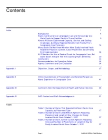
Title page 1
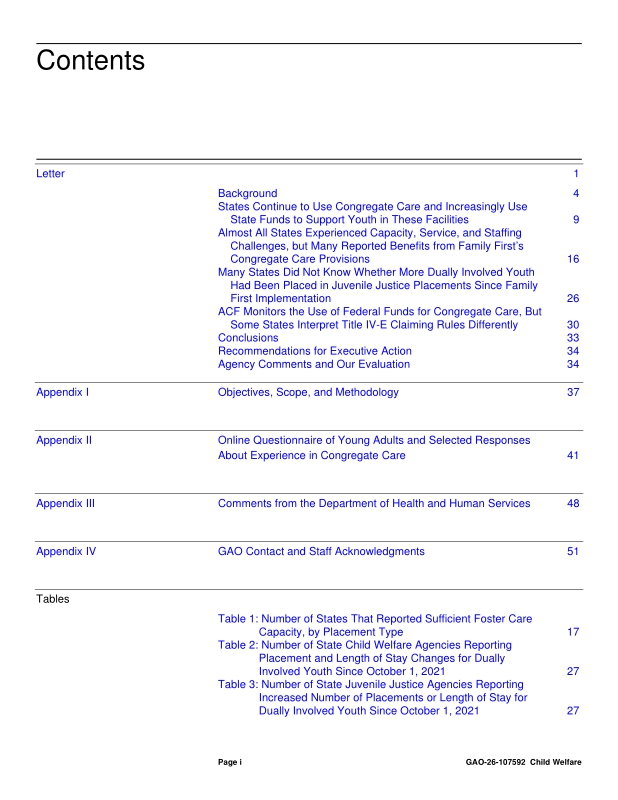
Contents 3
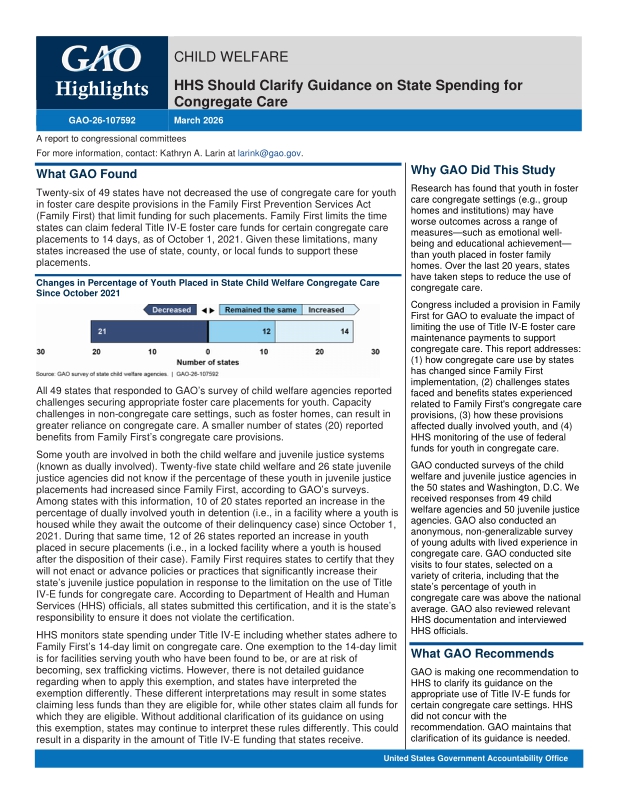
Highlights 2
Letter 6
Background 9
Trends in Congregate Care Placement 9
Title IV-E Foster Care Program 12
Family First Prevention Services Act 12
Federal Monitoring 13
States Continue to Use Congregate Care and Increasingly Use State Funds to Support Youth in These Facilities 14
The Majority of States Have Not Reduced the Use of Congregate Care in Recent Years 14
The Majority of States Have Adopted Qualified Residential Treatment Programs (QRTP) 16
The Majority of States Have Increased Their Own Spending on Congregate Care as Federal Funds Have Diminished, Shifting Child Welfare Spending Priorities 19
Almost All States Experienced Capacity, Service, and Staffing Challenges, but Many Reported Benefits from Family First's Congregate Care Provisions 21
All States Reported Challenges Obtaining Enough Foster Care Placements 21
Almost All States Reported Challenges Related to Providing Services to Youth and Staffing Congregate Care Facilities 26
Many States Reported Family First's Congregate Care Provisions Helped Reduce the Use of Congregate Care or Had Other Benefits 29
Many States Did Not Know Whether More Dually Involved Youth Had Been Placed in Juvenile Justice Placements Since Family First Implementation 31
ACF Monitors the Use of Federal Funds for Congregate Care, But Some States Interpret Title IV-E Claiming Rules Differently 35
Conclusions 38
Recommendations for Executive Action 39
Agency Comments and Our Evaluation 39
Appendix I: Objectives, Scope, and Methodology 42
Appendix II: Online Questionnaire of Young Adults and Selected Responses About Experience in Congregate Care 46
Appendix III: Comments from the Department of Health and Human Services 53
Appendix IV: GAO Contact and Staff Acknowledgments 56
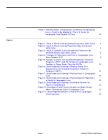
Tables 3
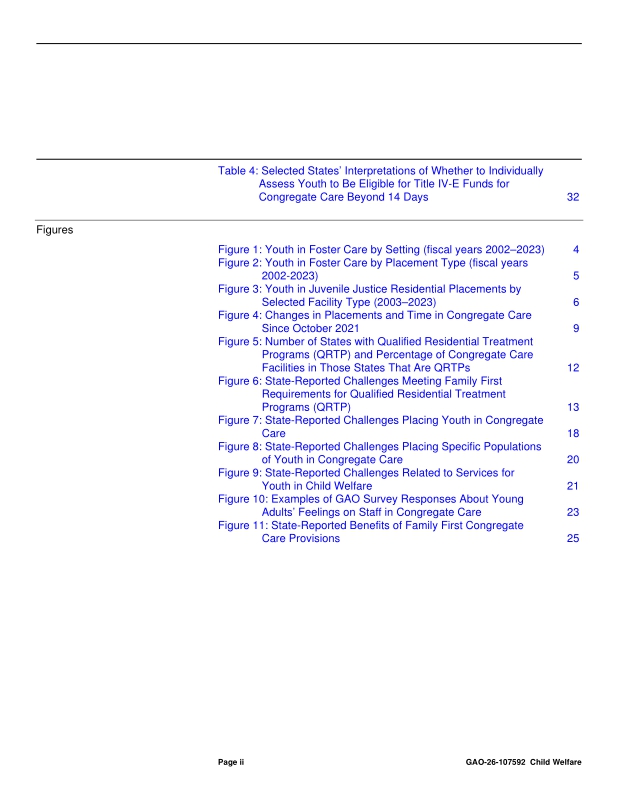
Table 1. Number of States That Reported Sufficient Foster Care Capacity, by Placement Type 22
Table 2. Number of State Child Welfare Agencies Reporting Placement and Length of Stay Changes for Dually Involved Youth Since October 1, 2021 32
Table 3. Number of State Juvenile Justice Agencies Reporting Increased Number of Placements or Length of Stay for Dually Involved Youth Since October 1, 2021 32
Table 4. Selected States' Interpretations of Whether to Individually Assess Youth to Be Eligible for Title IV-E Funds for Congregate Care Beyond 14 Days 37
Figures 4
Figure 1. Youth in Foster Care by Setting (fiscal years 2002-2023) 9
Figure 2. Youth in Foster Care by Placement Type (fiscal years 2002-2023) 10
Figure 3. Youth in Juvenile Justice Residential Placements by Selected Facility Type (2003-2023) 11
Figure 4. Changes in Placements and Time in Congregate Care Since October 2021 14
Figure 5. Number of States with Qualified Residential Treatment Programs (QRTP) and Percentage of Congregate Care Facilities in Those States That Are QRTPs 17
Figure 6. State-Reported Challenges Meeting Family First Requirements for Qualified Residential Treatment Programs (QRTP) 18
Figure 7. State-Reported Challenges Placing Youth in Congregate Care 23
Figure 8. State-Reported Challenges Placing Specific Populations of Youth in Congregate Care 25
Figure 9. State-Reported Challenges Related to Services for Youth in Child Welfare 26
Figure 10. Examples of GAO Survey Responses About Young Adults' Feelings on Staff in Congregate Care 28
Figure 11. State-Reported Benefits of Family First Congregate Care Provisions 30
*표시는 필수 입력사항입니다.
| 전화번호 |
|---|
| 기사명 | 저자명 | 페이지 | 원문 | 기사목차 |
|---|
| 번호 | 발행일자 | 권호명 | 제본정보 | 자료실 | 원문 | 신청 페이지 |
|---|
도서위치안내: / 서가번호:

우편복사 목록담기를 완료하였습니다.
*표시는 필수 입력사항입니다.
저장 되었습니다.
