
 대표어
대표어
 https://documents.worldbank.org/en/publication/documents-reports/documentdetail/099422203022618683
권호기사보기
| 기사명 | 저자명 | 페이지 | 원문 | 기사목차 |
|---|
결과 내 검색
동의어 포함
Title page 1
Contents 1
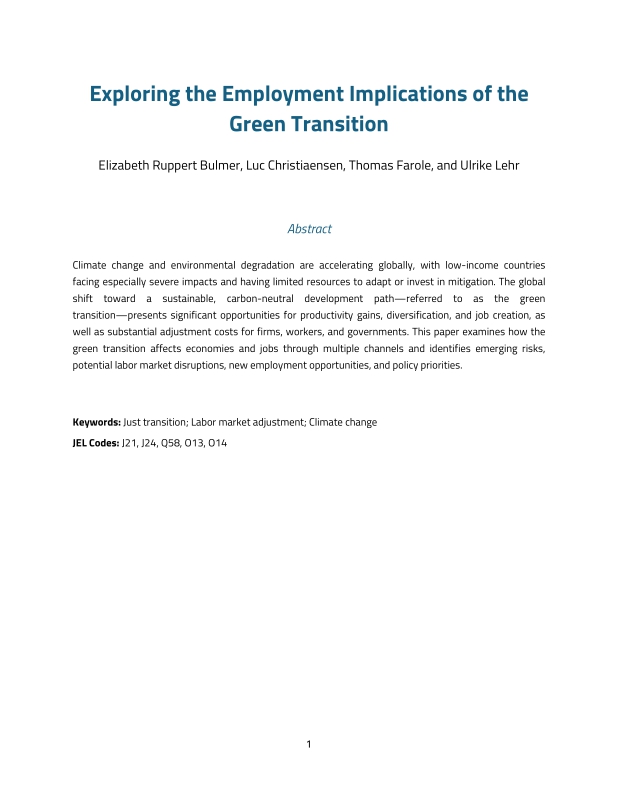
Abstract 3
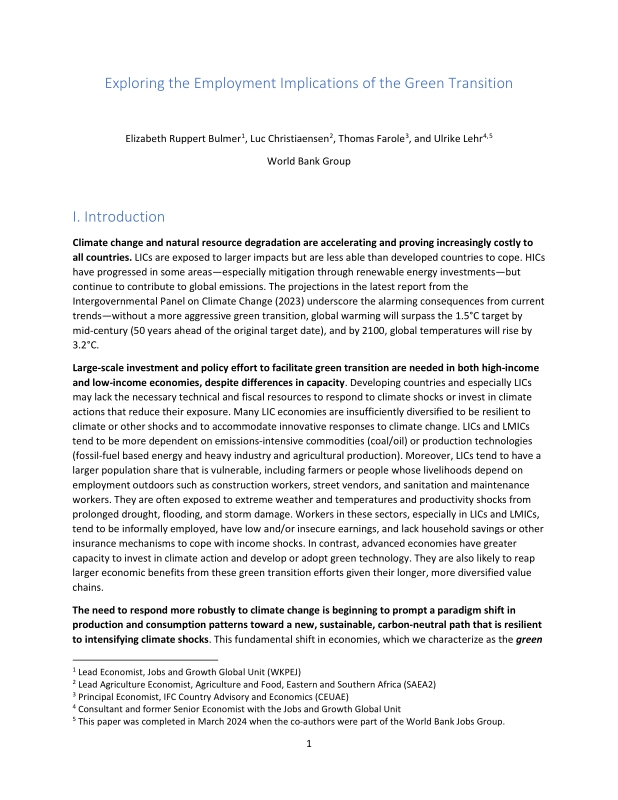
I. Introduction 4
II. The interface of the green transition and structural transformation 6
III. The impact of the green transition on jobs 8
IV. Overcoming impediments to accelerate the green transition 31
References 42
Figures 11
Figure 1. Sample of jobs along the quality spectrum and environmental spectrum 11
Figure 2. Percent of firms identifying electricity as a major constraint 21
Figure 3. Change in employment by driver, gender, and skill by 2030 24
Figure 4. Relative change in employment under revenue recycling scenarios 2 and 3 25
Figure 5. Ratio of green share of jobs in rural versus urban locations 27
Figure 6. Ratio of 'brown' share of jobs in rural versus urban locations 28
Figure 7. Cereal yields (Kg/ha/year) and adaptation readiness score (Panel A). Projected change in major cereal yields (average score for rice, wheat, and maize) and adaptation readiness score (Panel B) 33
Figure 8. Summary of policy options 41
Boxes 8
Box 1. Upgrading job quality through an integrated organizational approach to waste management 8
Box 2. Methods for estimating the number of green jobs: pros and cons 10
Box 3. Rainforest Alliance 13
Box 4. Job prospects for geothermal energy investment in Dominica 20
Box 5. Multi-Regional Input-Output MINDSET Model 23
Box 6. Nature-based solutions to climate change that create urban jobs and improve quality of life 30
Box 7. Examples of green innovation in rural Africa that support sustainable inclusive development 31
Box 8. Striving for a just coal transition 35
*표시는 필수 입력사항입니다.
| 전화번호 |
|---|
| 기사명 | 저자명 | 페이지 | 원문 | 기사목차 |
|---|
| 번호 | 발행일자 | 권호명 | 제본정보 | 자료실 | 원문 | 신청 페이지 |
|---|
도서위치안내: / 서가번호:

우편복사 목록담기를 완료하였습니다.
*표시는 필수 입력사항입니다.
저장 되었습니다.
