
 대표어
대표어
 https://www.ceew.in/publications/towards-climate-resilient-indian-industries


권호기사보기
| 기사명 | 저자명 | 페이지 | 원문 | 기사목차 |
|---|
결과 내 검색
동의어 포함
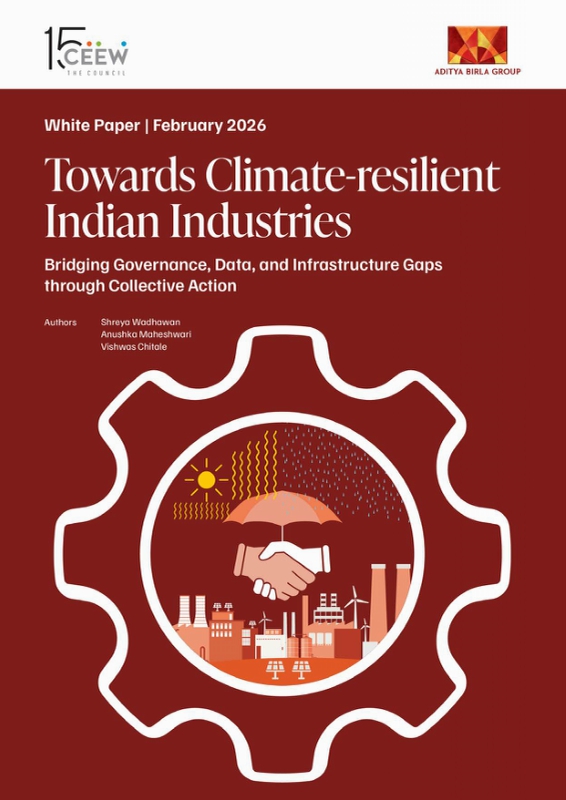
Title page 1
Contents 12
Executive summary 6
1. Climate risks as a material constraint on Indian industry 14
1.1. India's escalating physical climate risk profile 14
1.2. Climate impacts on industrial operations 17
2. Current policy landscape at the national and subnational levels 20
3. Gaps and challenges with advancing Indian industries' climate resilience 23
3.1. Fragmented policy and institutional landscape 23
3.2. Limited access to decision-grade climate risk data 23
3.3. Limited financial and technical support for adaptation actions 24
3.4. Capacity and financing constraints, particularly for MSMEs 25
3.5. Absence of standardised industry-relevant metrics and reporting frameworks 26
3.6. Uneven state-level implementation and limited access to decision-grade climate data 26
4. Current practices of building climate-resilience at the industry level 27
4.1. Key takeaways and lessons learnt 33
4.2. The need for collective climate action 34
4.3. The role of insurance and parametric solutions in industrial climate resilience 36
5. Recommendations 37
5.1. Recommendations for industry partners 37
5.2. For government stakeholders 40
6. Way forward: From policy intent to industrial climate resilience at scale 42
References 43
Tables 18
Table 1. Industrial sectors' exposure to climate risk 18
Figures 16
Figure 1. Rise in frequency and intensity of extreme climatic events in India 16
Figure 2. How physical climate hazards translate into operational and financial risks for Indian industries 19
Figure 3. India's climate policy landscape: Strong national frameworks but limited industry adaptation integration 22
Figure 4. Key gaps and challenges in advancing Indian industries' climate resilience 24
Boxes 25
Box 1. Why mitigation moves faster than adaptation - a policy contrast 25
Box 2. Why an industry coalition is critical for scaling climate resilience 38
*표시는 필수 입력사항입니다.
| 전화번호 |
|---|
| 기사명 | 저자명 | 페이지 | 원문 | 기사목차 |
|---|
| 번호 | 발행일자 | 권호명 | 제본정보 | 자료실 | 원문 | 신청 페이지 |
|---|
도서위치안내: / 서가번호:

우편복사 목록담기를 완료하였습니다.
*표시는 필수 입력사항입니다.
저장 되었습니다.
