
 대표어
대표어
 https://www.ceew.in/publications/guidebook-on-renewable-energy-and-biodiversity-net-gain
권호기사보기
| 기사명 | 저자명 | 페이지 | 원문 | 기사목차 |
|---|
결과 내 검색
동의어 포함
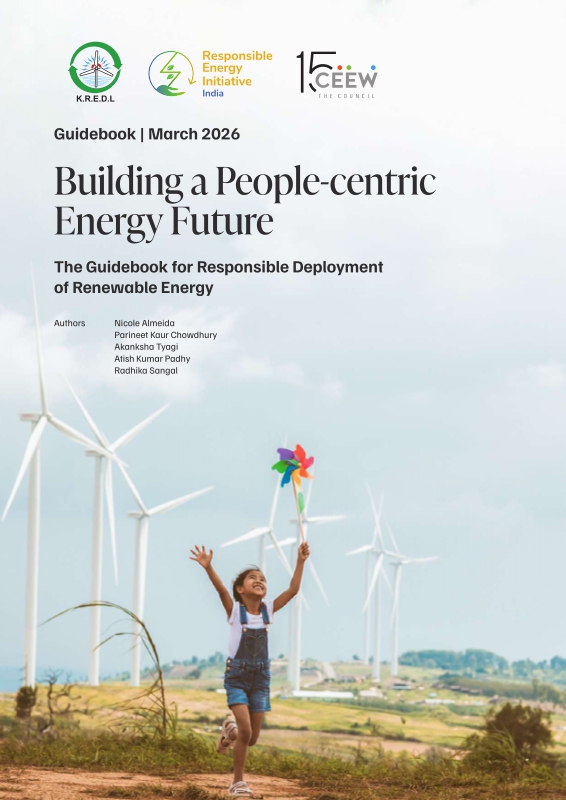
Title page 1
Contents 13
Acknowledgments 4
Executive summary 14
1. Introduction 17
2. How to use the Guidebook 20
2.1. Scope 20
2.2. Structuring 21
2.3. Themes covered 22
2.4. Different levels of responsibility 26
3. The pre-feasibility and bid approval phase 29
3.1. Choose land parcels that have the lowest impact on people and the environment: Low-impact siting 30
3.2. Conduct a social assessment, assess social dynamics, map stakeholders to develop an engagement plan across the project lifecycle 35
3.3. Identify equitable land procurement Identify an equitable land procurement model 39
3.4. Select business partners and develop contracts to ensure commitments to responsibility 42
3.5. Build contractors' capacity in responsible business practices and monitoring 44
3.6. Incorporate costing, and plan for responsible deployment in project bidding and reporting 45
4. The site preparation phase 50
4.1. Conduct an environmental and social impact assessment (ESIA) 51
4.2. Develop an environment and social management and monitoring plan (ESMMP), and undertake mitigation activities 54
4.3. Adopt an inclusive compensation setting processes 59
4.4. Ensure transparent communication of project details to enhance trust and collaboration with communities 60
4.5. Implement a grievance redressal mechanism to resolve grievances and disputes in a fair and timely manner 64
4.6. Develop and implement a plan to integrate local community members into jobs created by the RE project, alongside livelihood and... 67
4.7. Identify community needs and prepare a plan for community development 69
4.8. Protect ecosystems through the ESMMP and use sustainable construction methods 73
4.9. Continue implementation of capacity building, monitoring procedures and contract finalisation of business partners 77
4.10. Preserve cultural heritage 78
5. The construction and commissioning phase 83
5.1. Implement, monitor, and course-correct social and environmental mitigation strategies, and other efforts to contribute towards the environment 84
5.2. Ensure community health and safety measures and adhere to labour laws 88
5.3. Undertake responsible waste management 90
5.4. Implement mechanisms for grievance redressal, employment, and skilling-related activities, community development initiatives, ... 92
6. The operations and maintenance phase 97
6.1. Ensure regular communication with impacted communities 98
6.2. Sustain impact mitigation measures, grievance management, employment generation, and community development initiatives 99
6.3. Monitor business partners 101
6.4. Mitigate the impact on environment and biodiversity, and actively undertake measures for net gain and regeneration 102
6.5. Plan for decommissioning 104
Annexure 1 - Legal Register for applicable laws and regulations 111
Annexure 2 - Environmental, social and climate risks screening for low-impact siting 119
Annexure 3 - Key informant interview template for social assessment 127
Annexure 4 - Consideration for valuers 129
Annexure 5 - Examples of activities that can be undertaken by leader and pioneer level developers 130
Annexure 6 - Role of an environment and social officer 132
Annexure 7 - Protecting birds and bats 133
References 135
Tables 27
Table 1. Four levels of responsible business practices 27
Table 2. Template to create an engagement plan to engage with stakeholders 38
Table 3. Differences in procurement for private and common land 40
Table 4. Moving up levels of responsibility in Phase 1 47
Table 5. How strengthening biodiversity benefits RE project operations 75
Table 6. Moving up levels of responsibility in Phase 2 80
Table 7. Moving up levels of responsibility in Phase 3 94
Table 8. Moving up levels of responsibility in Phase 4 107
Table 9. Summary of activities across phases 108
Figures 18
Figure 1. The four principles of responsible deployment 18
Figure 2. The four levels of responsible RE deployment 19
Figure 3. From bidding to decommissioning-the deployment cycle of an RE project 21
Figure 4. Responsibility is a spectrum spread across four levels 27
Figure 5. Responsible activites to be carried out during Phase 1 of RE deployment 30
Figure 6. Critical requirements to plan a successful stakeholder engagement strategy 35
Figure 7. Social dynamics and intersections of stakeholder (indicative) 37
Figure 8. Assessing local dynamics to identify vulnerabilities and interest of key stakeholders 38
Figure 9. Responsible activities to be carried out during Phase 2 of RE deployment 51
Figure 10. The biodiversity loss mitigation hierarchy can be applicable to social aspects 54
Figure 11. Process for developing an environment and social management and monitoring plan 54
Figure 12. Process for setting up a grievance redressal mechanism 64
Figure 13. Employment should cover integration of communities in the project as well as alternative livelihood generation 68
Figure 14. Responsible activities to be carried out during Phase 3 of RE deployment 83
Figure 15. Meadows to green corridors: When nature takes centre stage at RE plants 86
Figure 16. Responsible activities to be carried out during Phase 4 of RE deployment 98
Boxes 34
Box 1. Case study - balancing technical, social, and ecological needs in renewable energy land siting 34
Box 2. Case study - community members earning sweat equity: Insights from a project in South America 41
Box 3. Case study - effective stakeholder identification and analysis in the Kairouan Solar Project ESIA, Tunisia 53
Box 4. Case study - using the mitigation hierarchy to manage impacts at the BayWa r.e. plant in France 58
Box 5. Case study - fostering local acceptance through early engagement at Vattenfall's Pen Y Cymoedd wind farm in Wales 62
Box 6. Case study - assessing community needs for effective community development: learnings from Spain 72
Box 7. Case study - Tata Power's ecosystem-sensitive solar development in Anantapur 76
Box 8. Case study - Cultural collaboration and heritage preservation throughout lifecycle of project at the Hornsdale Wind Farm in Australia 79
Box 9. Case study - Philippines' Burgos Wind Farm maximising co-benefits of project development 87
Box 10. Case study - ERG's social purpose solar revamping, a circular economy success story 91
Box 11. Case study - conservation of biodiversity, while ensuring community benefit 103
Box 12. Case study - decommissioning planning that includes commitments to land restoration and waste management 106
Annexure Tables 113
Table A1. Overview of clearance procedures for RE projects 113
Table A2. Modes of Land procurement for RE Projects 115
Table A3. Labour and occupational health and safety compliances for RE projects 116
Table A4. Key court rulings shaping environmental and social governance 117
Table A5. Environmental and social pre-screening tool for developers 119
Table A6. Social assessment required before siting and after siting 127
Table A7. Key considerations for valuers in technical valuation methods 129
Table A8. Examples of activities that can be undertaken by leader and pioneer level developers 130
Table A9. Indicative roles of the environment and social (E&S) officer 132
*표시는 필수 입력사항입니다.
| 전화번호 |
|---|
| 기사명 | 저자명 | 페이지 | 원문 | 기사목차 |
|---|
| 번호 | 발행일자 | 권호명 | 제본정보 | 자료실 | 원문 | 신청 페이지 |
|---|
도서위치안내: / 서가번호:

우편복사 목록담기를 완료하였습니다.
*표시는 필수 입력사항입니다.
저장 되었습니다.
