
 대표어
대표어
 https://op.europa.eu/en/publication-detail/-/publication/aa993510-2a55-11f1-906d-01aa75ed71a1/language-en?WT.mc_id=Selectedpublications&WT.ria_c=41957&WT.ria_f=6415&WT.ria_ev=search
권호기사보기
| 기사명 | 저자명 | 페이지 | 원문 | 기사목차 |
|---|
결과 내 검색
동의어 포함
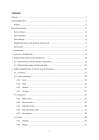
Title page 1
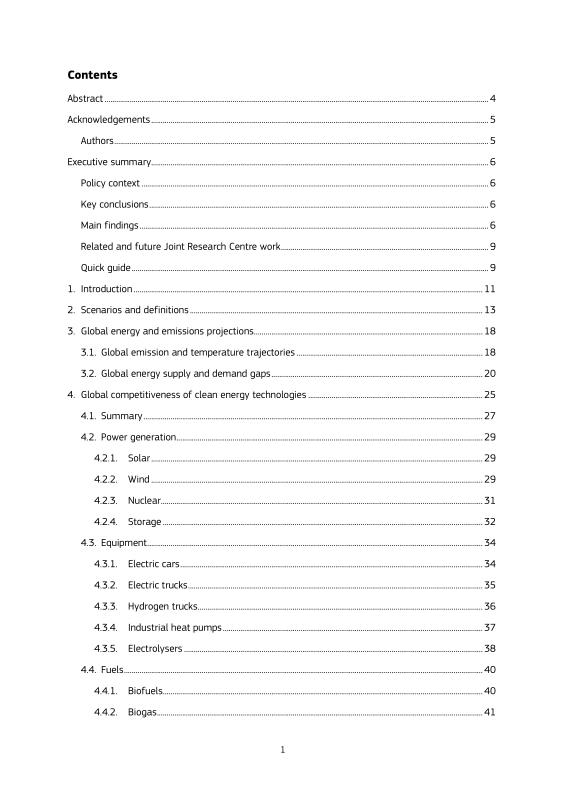
Contents 3
Abstract 6
Acknowledgements 7
Authors 7
Executive summary 8
Policy context 8
Key conclusions 8
Main findings 8
Related and future Joint Research Centre work 11
Quick guide 11
1. Introduction 12
2. Scenarios and definitions 14
3. Global energy and emission projections 19
3.1. Global emission and temperature trajectories 20
3.2. Global energy supply and demand gaps 22
4. Global competitiveness of clean technologies 25
4.1. Summary 29
4.2. Power generation 31
4.2.1. Solar 31
4.2.2. Wind 31
4.2.3. Nuclear 33
4.2.4. Storage 34
4.3. Equipment 36
4.3.1. Electric cars 36
4.3.2. Electric trucks 37
4.3.3. Hydrogen trucks 38
4.3.4. Industrial heat pumps 39
4.3.5. Electrolysers 40
4.4. Fuels 42
4.4.1. Biofuels 42
4.4.2. Biogas 43
4.4.3. Liquid synfuels 44
4.4.4. E-methane 46
4.4.5. Green ammonia 47
4.5. Captured emissions 48
4.5.1. CCS 48
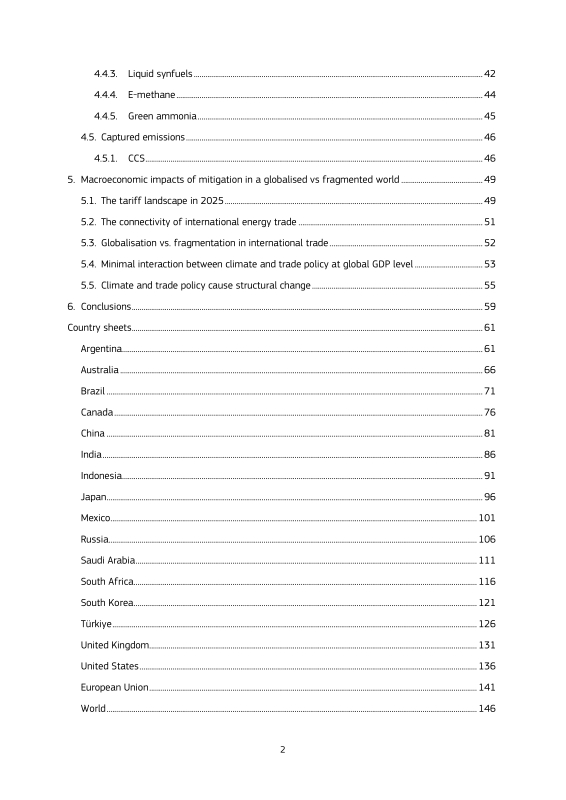
5. Macroeconomic impacts of mitigation in a globalised vs fragmented world 50
5.1. The tariff landscape in 2025 51
5.2. The connectivity of international energy trade 53
5.3. Globalisation vs. fragmentation in international trade 54
5.4. Minimal interaction between climate and trade policy at global GDP level 55
5.5. Climate and trade policy cause structural change 57
6. Conclusions 60
7. Annexes and Country Sheets 62
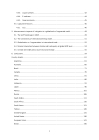
Country sheets 63
Argentina 63
Australia 68
Brazil 73
Canada 78
China 83
India 88
Indonesia 93
Japan 98
Mexico 103
Russia 108
Saudi Arabia 113
South Africa 118
South Korea 123
Türkiye 128
United Kingdom 133
United States 138
European Union 143
World 148
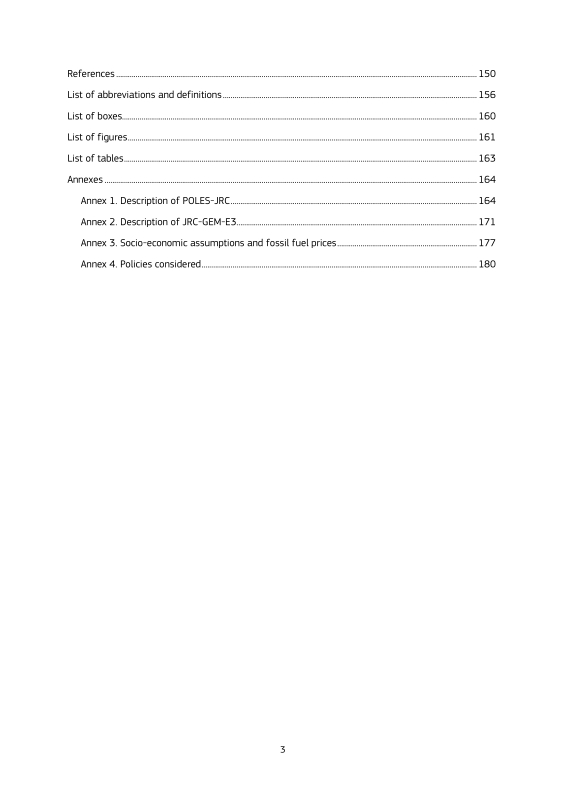
References 152
List of abbreviations and definitions 158
Annex 1. Description of POLES-JRC 166
Annex 2. Description of JRC-GEM-E3 173
Annex 3. Socio-economic assumptions and fossil fuel prices 179
Annex 4. Policies considered 182
Tables 165
Table 1. Summary of the scenarios and references and their combinations 55
Table 2. List of non-EU individual countries represented in POLES-JRC (for energy balances) 169
Table 3. Country mapping for the 12 regions in POLES-JRC (for energy balances) 170
Table 4. POLES-JRC model historical data and projections 171
Table 5. Sectors in the JRC-GEM-E3 model 174
Table 6. Regional aggregation of the JRC-GEM-E3 model 175
Table 7. World population and GDP 179
Table 8. GDP assumptions 180
Table 9. Reference policies 182
Table 10. Coal and nuclear phase-out policies (additional Reference policies) 189
Table 11. NDC and LTS policies, large emitters 189
Table 12. NDC policies, rest of the world 194
Figures 163
Figure ES1. Global GHG emissions and global mean temperature change, by scenario 9
Figure ES2. Percentage of the 1.5°C scenario global level achieved in the Reference scenario, in 2050 10
Figure 1. Global GHG emissions and global mean temperature change, by scenario 21
Figure 2. Global emissions, by sector, 1.5°C scenario 21
Figure 3. Global primary energy demand, by scenario (left) and change in global primary energy demand in the 1.5°C scenario, by timeframe (right) 22
Figure 4. Global power generation, by scenario (left) and change in global power generation in the 1.5°C scenario, by timeframe (right) 23
Figure 5. Global industry energy demand, by scenario (left) and change in global industry energy demand in the 1.5°C scenario, by timeframe (right) 23
Figure 6. Global transport energy demand, by scenario (left) and change in global transport energy demand in the 1.5°C scenario, by timeframe (right) 24
Figure 7. Global buildings energy demand, by scenario (left) and change in global buildings energy demand in the 1.5°C scenario, by timeframe (right) 24
Figure 8. Percentage of the 1.5°C scenario global level achieved in the Reference scenario, in 2050 30
Figure 9. Global installed capacity of solar power, by scenario 31
Figure 10. Global installed capacity of wind power, by scenario 32
Figure 11. Global installed capacity of nuclear power, by scenario 33
Figure 12. Global installed capacity of storage in the power sector, by scenario 35
Figure 13. Global electric passenger car fleet, by scenario 36
Figure 14. Global electric truck fleet, by scenario 37
Figure 15. Global H₂ truck fleet, by scenario 38
Figure 16. Global industrial heat pump installations, by scenario 39
Figure 17. Global installed capacity of electrolysers, by scenario 41
Figure 18. Global production of liquid biofuels, by scenario 42
Figure 19. Global production of biogas, by scenario 43
Figure 20. Global production of liquid synfuels, by scenario 44
Figure 21. Global production of e-methane, by scenario 46
Figure 22. Global production of green ammonia for fuel, by scenario 47
Figure 23. Global capture of CO₂, by scenario 48
Figure 24. Selected trade flows in 2017 - energy trade - billion USD 2017 53
Figure 25. Global GDP (excluding effects of climate change impacts) and global GHG emissions (including LULUCF), by scenario 55
Figure 26. Total global trade by sector in different scenarios, relative to base year 2017 (index 2017 = 100) 58
Figure 27. Share of fossil fuels in global trade across years and scenarios (based on trade in monetary terms) 59
Figure 28. POLES-JRC model general scheme 166
Figure 29. POLES-JRC model regions (for energy balances) 169
Figure 30. Schematic overview of the JRC-GEM-E3 model 173
Figure 31. International fossil fuel prices in the Reference scenario 181
Boxes 162
Box 1. Enhancements and updates of the POLES-JRC model, and differences compared to GECO 2024 17
Box 2. Evidence on the importance of trade for green technology supply chains 52
Box 3. Modelling the fragmentation of international trade 54
Box 4. Exempting fossil fuels from trade restrictions 57
*표시는 필수 입력사항입니다.
| 전화번호 |
|---|
| 기사명 | 저자명 | 페이지 | 원문 | 기사목차 |
|---|
| 번호 | 발행일자 | 권호명 | 제본정보 | 자료실 | 원문 | 신청 페이지 |
|---|
도서위치안내: / 서가번호:

우편복사 목록담기를 완료하였습니다.
*표시는 필수 입력사항입니다.
저장 되었습니다.
