
 대표어
대표어
 https://www.iisd.org/publications/report/data-digital-trade-law
권호기사보기
| 기사명 | 저자명 | 페이지 | 원문 | 기사목차 |
|---|
결과 내 검색
동의어 포함
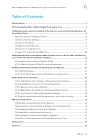
Title page 1
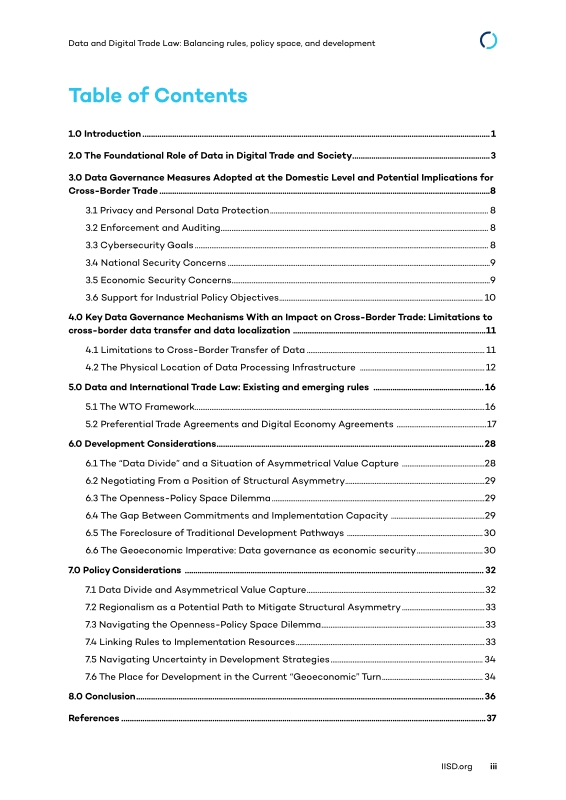
Contents 3
Acknowledgements 2
1.0. Introduction 6
2.0. The Foundational Role of Data in Digital Trade and Society 8
3.0. Data Governance Measures Adopted at the Domestic Level and Potential Implications for Cross-Border Trade 13
3.1. Privacy and Personal Data Protection 13
3.2. Enforcement and Auditing 13
3.3. Cybersecurity Goals 13
3.4. National Security Concerns 14
3.5. Economic Security Concerns 14
3.6. Support for Industrial Policy Objectives 15
4.0. Key Data Governance Mechanisms With an Impact on Cross-Border Trade: Limitations to cross-border data transfer and data localization 16
4.1. Limitations to Cross-Border Transfer of Data 16
4.2. The Physical Location of Data Processing Infrastructure 17
5.0. Data and International Trade Law: Existing and emerging rules 21
5.1. The WTO Framework 21
5.2. Preferential Trade Agreements and Digital Economy Agreements 22
6.0. Development Considerations 33
6.1. The "Data Divide" and a Situation of Asymmetrical Value Capture 33
6.2. Negotiating From a Position of Structural Asymmetry 34
6.3. The Openness-Policy Space Dilemma 34
6.4. The Gap Between Commitments and Implementation Capacity 34
6.5. The Foreclosure of Traditional Development Pathways 35
6.6. The Geoeconomic Imperative: Data governance as economic security 35
7.0. Policy Considerations 37
7.1. Data Divide and Asymmetrical Value Capture 37
7.2. Regionalism as a Potential Path to Mitigate Structural Asymmetry 38
7.3. Navigating the Openness-Policy Space Dilemma 38
7.4. Linking Rules to Implementation Resources 38
7.5. Navigating Uncertainty in Development Strategies 39
7.6. The Place for Development in the Current "Geoeconomic" Turn 39
8.0. Conclusion 41
References 42
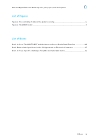
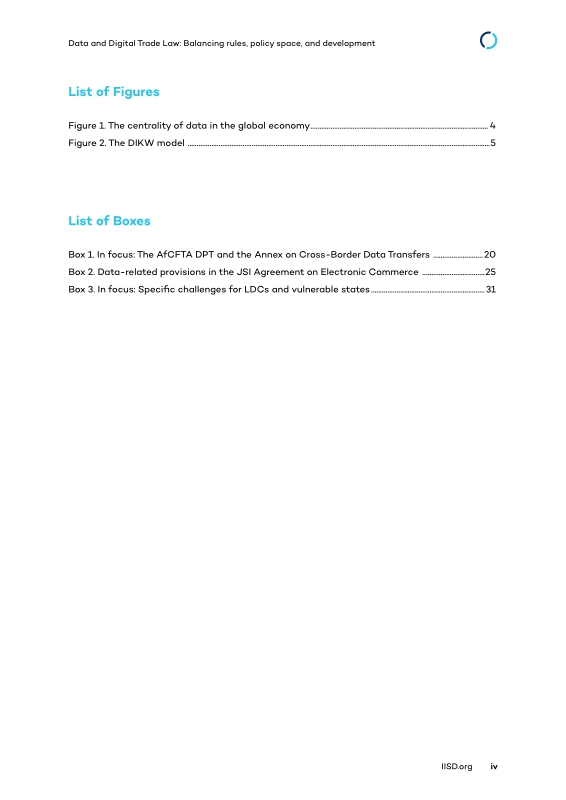
Figures 4
Figure 1. The centrality of data in the global economy 9
Figure 2. The DIKW model 10
Boxes 4
Box 1. In focus: The AfCFTA DPT and the Annex on Cross-Border Data Transfers 25
Box 2. Data-related provisions in the JSI Agreement on Electronic Commerce 30
Box 3. In focus: Specific challenges for LDCs and vulnerable states 36
*표시는 필수 입력사항입니다.
| 전화번호 |
|---|
| 기사명 | 저자명 | 페이지 | 원문 | 기사목차 |
|---|
| 번호 | 발행일자 | 권호명 | 제본정보 | 자료실 | 원문 | 신청 페이지 |
|---|
도서위치안내: / 서가번호:

우편복사 목록담기를 완료하였습니다.
*표시는 필수 입력사항입니다.
저장 되었습니다.
