
 대표어
대표어
 https://openknowledge.worldbank.org/entities/publication/d658de94-bd69-4a79-acfb-9461be639090
권호기사보기
| 기사명 | 저자명 | 페이지 | 원문 | 기사목차 |
|---|
결과 내 검색
동의어 포함
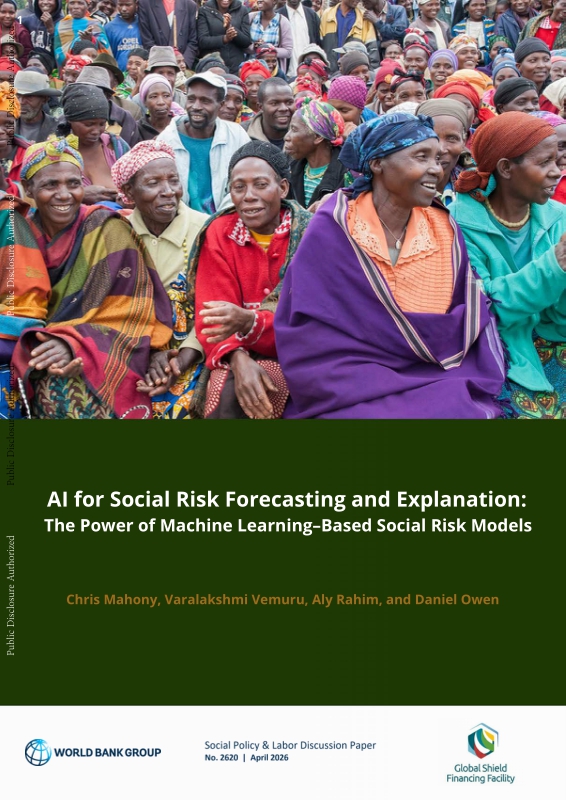
Title page 1
Contents 1
Introduction 4
Challenges to Modeling Social Risk 6
Unleashing the Power of Big Data and Machine Learning: Seeing through the Fog of Social Risk 7
Modeling to Inform World Bank Group Operations Affected by Complex Social Risk 9
Conclusion 18
References 20
Abstract 23
Tables 18
Table 1. Considerations for the viability of machine learning model-produced predictions 18
Figures 7
Figure 1. A conceptual framework of social risk modeling 7
Figure 2. Correlation between variables and violence events 10
Figure 3. Correlation between all variables in Democratic Republic of Congo model 11
Figure 4. Model-informed factors' influence over change in violence 12
Figure 5. Expert-informed theory of migration, violence, and livestock 13
Figure 6. Built structure identification in a Wajir, Kenya, neighborhood 13
Figure 7. Model-identified factors' association with population change 14
Figure 8. Potential live visualization of violence model forecasts 15
Figure 9/Figure 10. Change in crime preceding social unrest events 16
Figure 10/Figure 11. Predicted versus actual volume of reported crime events 17
Figure 11/Figure 12. Model applications in development policy and operations 19
Boxes 10
Box 1. Conflict-affected eastern provinces of Democratic Republic of Congo 10
Box 2. The Horn of Africa 13
Box 3. Small Island Developing State 16
*표시는 필수 입력사항입니다.
| 전화번호 |
|---|
| 기사명 | 저자명 | 페이지 | 원문 | 기사목차 |
|---|
| 번호 | 발행일자 | 권호명 | 제본정보 | 자료실 | 원문 | 신청 페이지 |
|---|
도서위치안내: / 서가번호:

우편복사 목록담기를 완료하였습니다.
*표시는 필수 입력사항입니다.
저장 되었습니다.
