
 대표어
대표어
 https://documents.worldbank.org/en/publication/documents-reports/documentdetail/099042226142014971
권호기사보기
| 기사명 | 저자명 | 페이지 | 원문 | 기사목차 |
|---|
결과 내 검색
동의어 포함
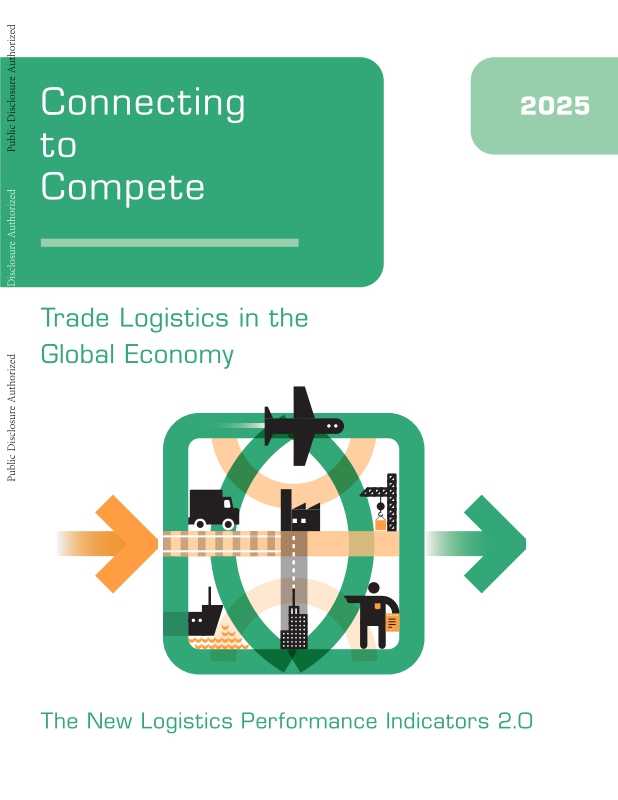
Title page 1
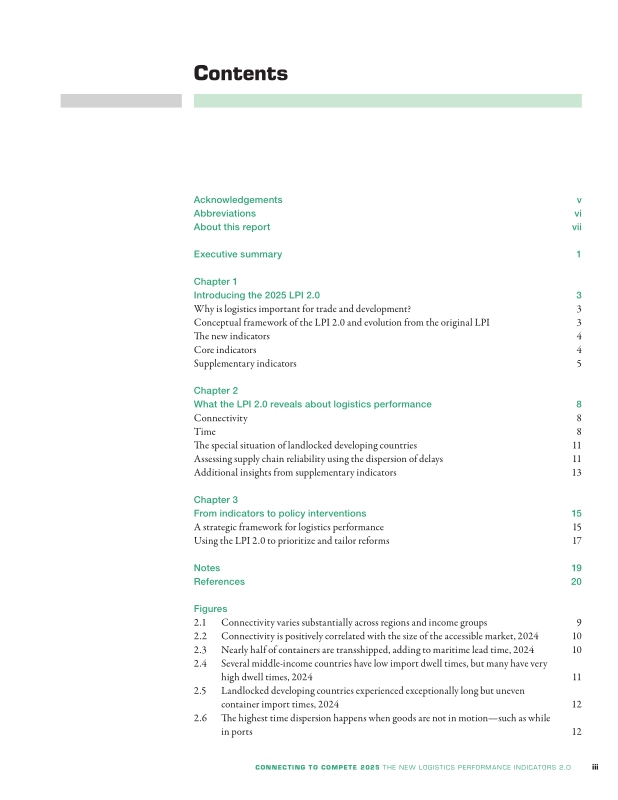
Contents 4
Acknowledgements 6
Abbreviations 7
About this report 8
Executive summary 9
CHAPTER 1. Introducing the 2025 LPI 2.0 11
Why is logistics important for trade and development? 11
Conceptual framework of the LPI 2.0 and evolution from the original LPI 11
The new indicators 12
Core indicators 12
Supplementary indicators 13
CHAPTER 2. What the LPI 2.0 reveals about logistics performance 16
Connectivity 16
Time 16
The special situation of landlocked developing countries 19
Assessing supply chain reliability using the dispersion of delays 19
Additional insights from supplementary indicators 21
CHAPTER 3. From indicators to policy interventions 23
A strategic framework for logistics performance 23
Using the LPI 2.0 to prioritize and tailor reforms 25
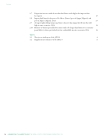
Notes 27
References 28
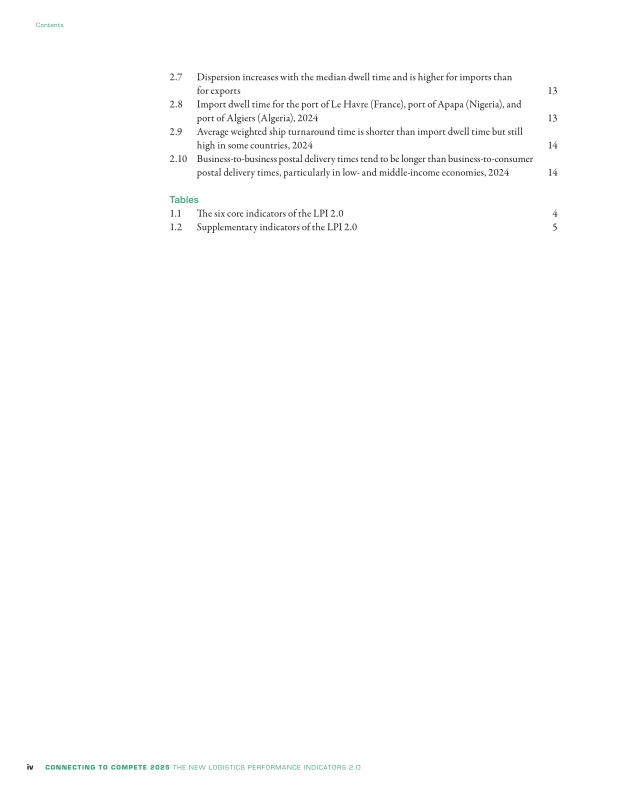
Figure 2.1. Connectivity varies substantially across regions and income groups 17
Figure 2.2. Connectivity is positively correlated with the size of the accessible market, 2024 18
Figure 2.3. Nearly half of containers are transshipped, adding to maritime lead time, 2024 18
Figure 2.4. Several middle-income economies have low import dwell times, but many have very high dwell times, 2024 19
Figure 2.5. Landlocked developing countries experienced exceptionally long but uneven container import times, 2024 20
Figure 2.6. The highest time dispersion happens when goods are not in motion-such as while in ports 20
Figure 2.7. Dispersion increases with the median dwell time and is higher for imports than for exports 21
Figure 2.8. Import dwell time for the port of Le Havre (France), port of Apapa (Nigeria), and port of Algiers (Algeria), 2024 21
Figure 2.9. Average weighted ship turnaround time is shorter than import dwell time but still high in some economies, 2024 22
Figure 2.10. Business-to-business postal delivery times tend to be longer than business-to-consumer postal delivery times,... 22
*표시는 필수 입력사항입니다.
| 전화번호 |
|---|
| 기사명 | 저자명 | 페이지 | 원문 | 기사목차 |
|---|
| 번호 | 발행일자 | 권호명 | 제본정보 | 자료실 | 원문 | 신청 페이지 |
|---|
도서위치안내: / 서가번호:

우편복사 목록담기를 완료하였습니다.
*표시는 필수 입력사항입니다.
저장 되었습니다.
