
 대표어
대표어
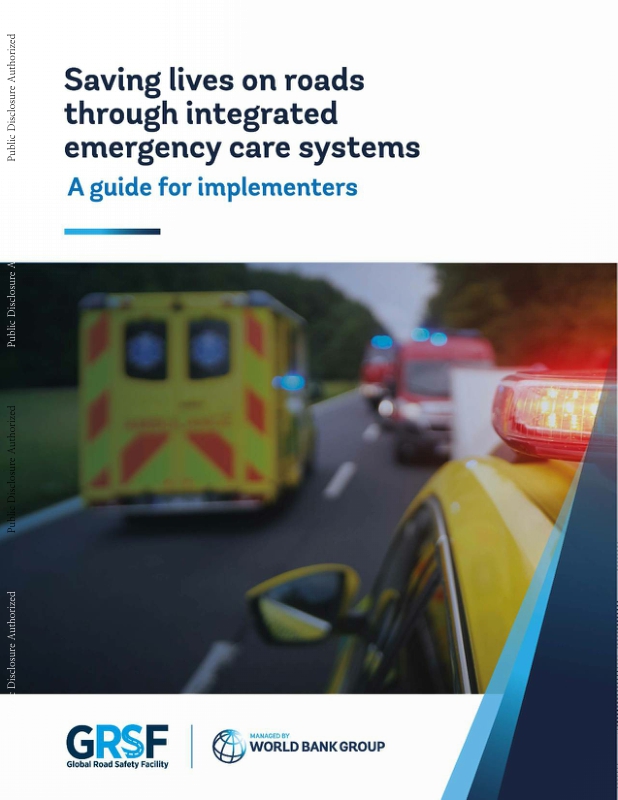
 https://documents.worldbank.org/en/publication/documents-reports/documentdetail/099052926092013258
권호기사보기
| 기사명 | 저자명 | 페이지 | 원문 | 기사목차 |
|---|
결과 내 검색
동의어 포함
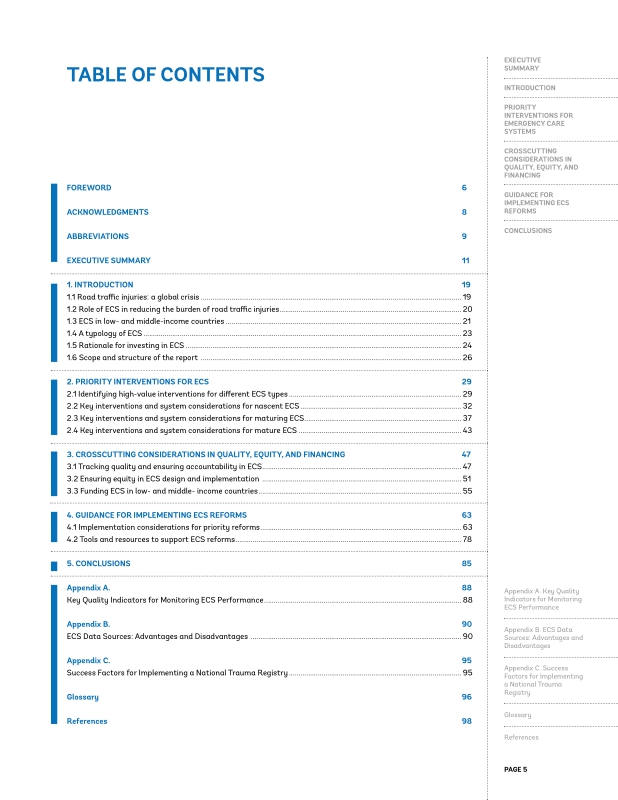
Title page 1
Contents 4
FOREWORD 5
ACKNOWLEDGEMENTS 7
ABBREVIATIONS 8
EXECUTIVE SUMMARY 10
1. INTRODUCTION 18
1.1. Road traffic injuries: a global crisis 18
1.2. Role of ECS in reducing the burden of road traffic injuries 19
1.3. ECS in low- and middle-income countries 20
1.4. A typology of ECS 22
1.5. Rationale for investing in ECS 23
1.6. Scope and structure of the report 25
2. PRIORITY INTERVENTIONS FOR EMERGENCY CARE SYSTEMS 28
2.1. Identifying high-value interventions for different ECS types 28
2.2. Key interventions and system considerations for nascent ECS 31
2.3. Key interventions and system considerations for maturing ECS 36
2.4. Key interventions and system considerations for mature ECS 42
3. CROSSCUTTING CONSIDERATIONS IN QUALITY, EQUITY, AND FINANCING 46
3.1. Tracking quality and ensuring accountability in ECS 46
3.2. Ensuring equity in ECS design and implementation 50
3.3. Funding ECS in low- and middle-income countries 54
4. GUIDANCE FOR IMPLEMENTING ECS REFORMS 62
4.1. Implementation of considerations for priority reforms 62
4.2. Tools and resources to support ECS reforms 77
5. CONCLUSIONS 84
Appendix A. Key Quality Indicators for Monitoring ECS Performance 87
Appendix B. ECS Data Sources: Advantages and Disadvantages 89
Appendix C. Success Factors for Implementing a National Trauma Registry 94
Glossary 95
References 97
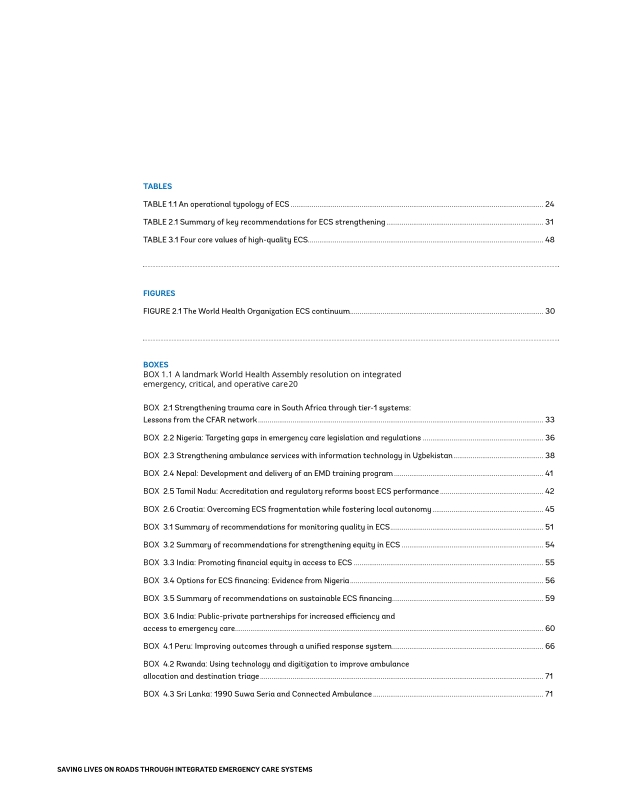
FIGURE 2.1. The World Health Organization ECS continuum 29
Boxes 3
BOX 1.1. A LANDMARK WORLD HEALTH ASSEMBLY RESOLUTION ON INTEGRATED EMERGENCY, CRITICAL, AND OPERATIVE CARE 19
BOX 2.1. STRENGTHENING TRAUMA CARE IN SOUTH AFRICA THROUGH TIER-1 SYSTEMS: LESSONS FROM THE CFAR NETWORK 32
BOX 2.2. NIGERIA: TARGETING GAPS IN EMERGENCY CARE LEGISLATION AND REGULATIONS 35
BOX 2.3. STRENGTHENING AMBULANCE SERVICES WITH INFORMATION TECHNOLOGY IN UZBEKISTAN 37
BOX 2.4. NEPAL: DEVELOPMENT AND DELIVERY OF AN EMD TRAINING PROGRAM 40
BOX 2.5. TAMIL NADU: ACCREDITATION AND REGULATORY REFORMS BOOST ECS PERFORMANCE 41
BOX 2.6. CROATIA: OVERCOMING ECS FRAGMENTATION WHILE FOSTERING LOCAL AUTONOMY 44
BOX 3.1. Summarizes the key recommendations presented above for tracking and improving ECS quality 50
BOX 3.2. Summary of recommendations for strengthening equity in ECS 53
BOX 3.3. INDIA: PROMOTING FINANCIAL EQUITY IN ACCESS TO ECS 54
BOX 3.4. OPTIONS FOR ECS FINANCING: EVIDENCE FROM NIGERIA 55
BOX 3.5. Summary of recommendations on sustainable ECS financing 58
BOX 3.6. INDIA: PUBLIC-PRIVATE PARTNERSHIPS FOR INCREASED EFFICIENCY AND ACCESS TO EMERGENCY CARE 59
BOX 4.1. PERU: IMPROVING OUTCOMES THROUGH A UNIFIED RESPONSE SYSTEM 65
BOX 4.2. RWANDA: USING TECHNOLOGY AND DIGITIZATION TO IMPROVE AMBULANCE ALLOCATION AND DESTINATION TRIAGE 70
BOX 4.3. SRI LANKA: 1990 SUWA SERIA AND CONNECTED AMBULANCE 70
*표시는 필수 입력사항입니다.
| 전화번호 |
|---|
| 기사명 | 저자명 | 페이지 | 원문 | 기사목차 |
|---|
| 번호 | 발행일자 | 권호명 | 제본정보 | 자료실 | 원문 | 신청 페이지 |
|---|
도서위치안내: / 서가번호:

우편복사 목록담기를 완료하였습니다.
*표시는 필수 입력사항입니다.
저장 되었습니다.
