
 대표어
대표어
 https://www.iisd.org/publications/report/canada-industrial-carbon-price-beyond-2030

권호기사보기
| 기사명 | 저자명 | 페이지 | 원문 | 기사목차 |
|---|
결과 내 검색
동의어 포함
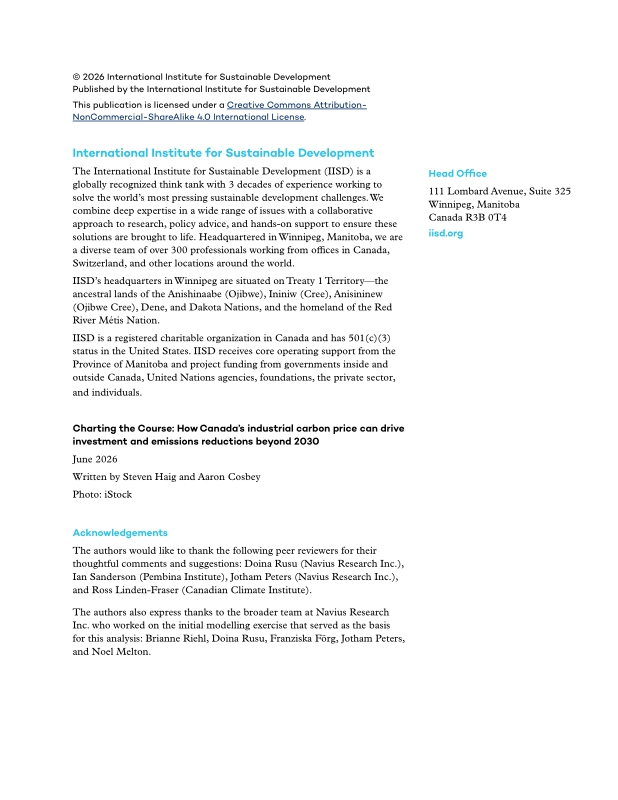
Title page 1
Contents 6
Acknowledgements 2
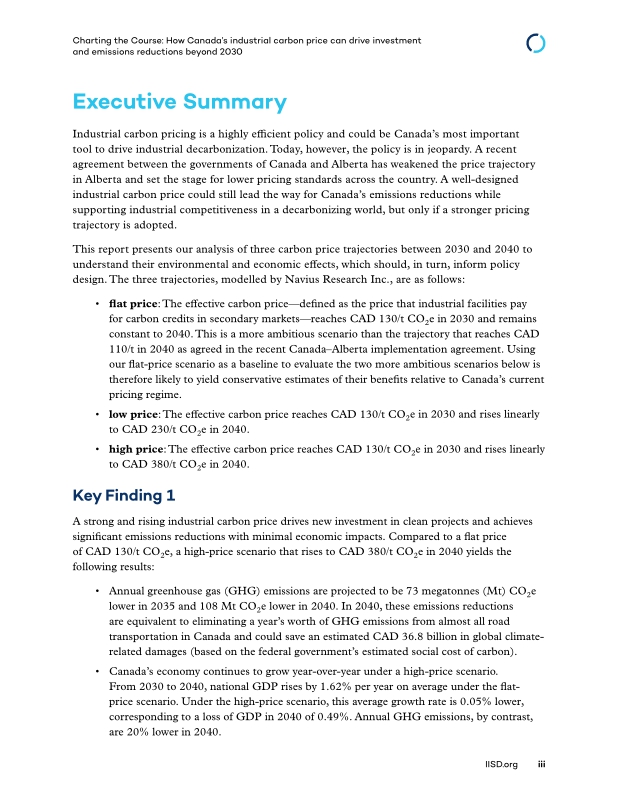
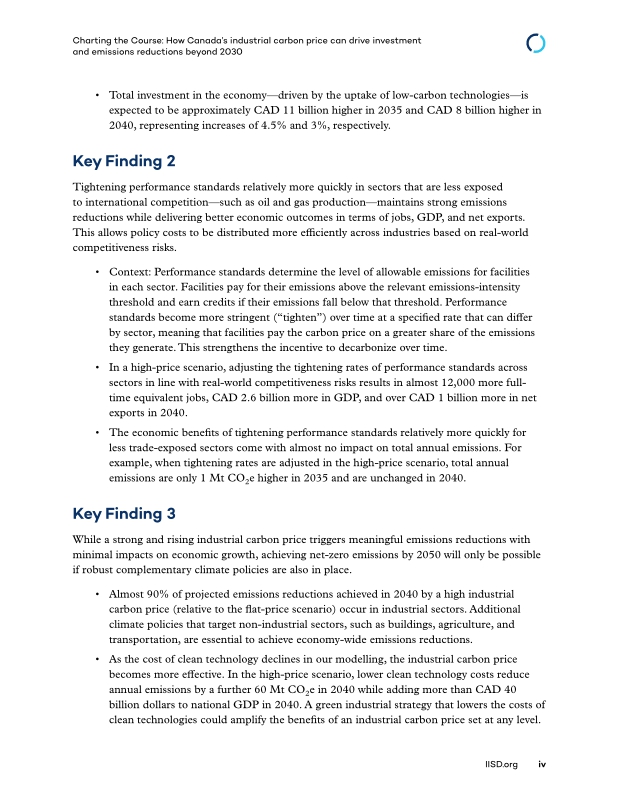
Executive Summary 3
1.0. Context 7
2.0. Methodology 9
2.1. The Scenarios 9
2.2. Assumptions, Limitations, and Notes for Interpretation 10
3.0. Key Findings 12
3.1. A Strong and Rising Industrial Carbon Price Drives New Investment in Clean Projects and Achieves Significant Emissions Reductions... 12
3.1.1. Emissions Reductions 12
3.1.2. Economic Impacts 13
3.1.3. Investment 16
3.1.4. Comparing Price Trajectories: High vs low 16
3.2. Tightening Performance Standards Relatively More Quickly in Sectors That Are Less Exposed to International Competition-Such as Oil... 17
3.2.1. Differentiated Tightening Rates for Performance Standards 17
3.2.2. Other Design Elements 18
3.3. While a Strong and Rising Industrial Carbon Price Triggers Meaningful Emissions Reductions With Minimal Impacts on Economic Growth,... 19
3.3.1. Emissions Reductions in Non-Industrial Sectors 19
3.3.2. Emissions Reductions in Industrial Sectors 20
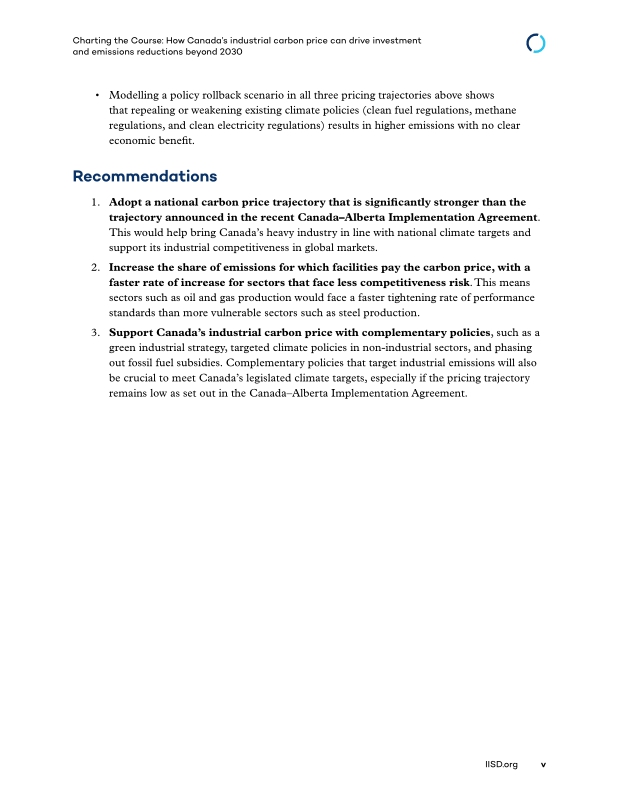
4.0. Recommendations 21
References 23
Figure 1. Industrial carbon price trajectories 10
Figure 2. Emissions in different price scenarios 13
Figure 3. Emissions vs GDP: High-price scenario 14
Figure 4. GDP growth continues in all price scenarios, with only minimal impacts from higher prices 14
Figure 5. A high carbon price results in greater annual investment 16
Figure 6. Net increase in jobs after adjusting tightening rates in high-price scenario 18
Figure 7. Emissions reductions by sector in high-price scenario 19
*표시는 필수 입력사항입니다.
| 전화번호 |
|---|
| 기사명 | 저자명 | 페이지 | 원문 | 기사목차 |
|---|
| 번호 | 발행일자 | 권호명 | 제본정보 | 자료실 | 원문 | 신청 페이지 |
|---|
도서위치안내: / 서가번호:

우편복사 목록담기를 완료하였습니다.
*표시는 필수 입력사항입니다.
저장 되었습니다.
