
 대표어
대표어
 https://www.ilo.org/publications/why-social-dialogue-necessary-sustainable-economic-development-exploring
권호기사보기
| 기사명 | 저자명 | 페이지 | 원문 | 기사목차 |
|---|
결과 내 검색
동의어 포함
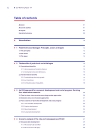
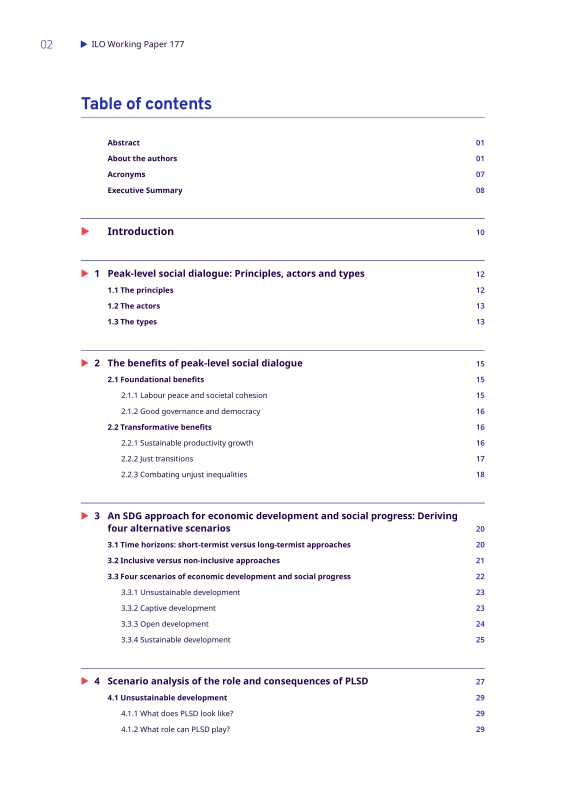
Title page 1
Contents 5
Abstract 4
About the authors 4
Acronyms 10
Executive Summary 11
Introduction 13
1. Peak-level social dialogue: Principles, actors and types 15
1.1. The principles 15
1.2. The actors 16
1.3. The types 16
2. The benefits of peak-level social dialogue 18
2.1. Foundational benefits 18
2.1.1. Labour peace and societal cohesion 18
2.1.2. Good governance and democracy 19
2.2. Transformative benefits 19
2.2.1. Sustainable productivity growth 19
2.2.2. Just transitions 20
2.2.3. Combating unjust inequalities 21
3. An SDG approach for economic development and social progress: Deriving four alternative scenarios 23
3.1. Time horizons: short-termist versus long-termist approaches 23
3.2. Inclusive versus non-inclusive approaches 24
3.3. Four scenarios of economic development and social progress 25
3.3.1. Unsustainable development 26
3.3.2. Captive development 26
3.3.3. Open development 27
3.3.4. Sustainable development 28
4. Scenario analysis of the role and consequences of PLSD 30
4.1. Unsustainable development 32
4.1.1. What does PLSD look like? 32
4.1.2. What role can PLSD play? 32
4.2. Captive development 35
4.2.1. What does PLSD look like? 35
4.2.2. What role can PLSD play? 36
4.3. Open development 39
4.3.1. What does PLSD look like? 39
4.3.2. What role can PLSD play? 39
4.4. Sustainable development 42
4.4.1. What does PLSD look like? 42
4.4.2. What role can PLSD play? 42
5. Discussion: PLSD for sustainable economic development and social progress 47
5.1. PLSD for decent work and full employment 47
5.2. PLSD for a fair income distribution 48
5.3. PLSD to navigate just transitions 49
5.4. PLSD for social justice 50
Conclusion 52
References 53
Figure 1. The foundational and transformative benefits of PLSD 18
Figure 2. Four scenarios of economic development and social progress 25
Figure 3. The effects of social dialogue on economic development: Contingencies and feedback effects 30
Figure 4. Mapping peak-level social dialogue as a force for change using scenario analysis 31
Boxes 9
Box 1. Agents of just transition or defending the status quo? 33
Box 2. How PLSD can leverage wider concerns for labour compliance in the global apparel sector 34
Box 3. Tripartite PLSD in liberal market economies during the COVID-19 pandemic 35
Box 4. Precarious work and worker protests for more inclusive development and decent work 37
Box 5. Improving knowledge of the workplace impact of digitalization 38
Box 6. Social dialogue to improve family support in developing countries 40
Box 7. The problem of absent collective voice: Precarious factory work and sexual harassment in Uganda 41
Box 8. Using minimum wage policy to reduce poverty and address high inflation in Argentina 44
Box 9. Improving social protection measures during the COVID-19 crisis through PLSD 45
*표시는 필수 입력사항입니다.
| 전화번호 |
|---|
| 기사명 | 저자명 | 페이지 | 원문 | 기사목차 |
|---|
| 번호 | 발행일자 | 권호명 | 제본정보 | 자료실 | 원문 | 신청 페이지 |
|---|
도서위치안내: / 서가번호:

우편복사 목록담기를 완료하였습니다.
*표시는 필수 입력사항입니다.
저장 되었습니다.
