
 대표어
 https://www.martenscentre.eu/publication/digitalising-europes-economy-the-role-of-small-and-medium-sized-enterprises-2/


권호기사보기
| 기사명 | 저자명 | 페이지 | 원문 | 기사목차 |
|---|
결과 내 검색
동의어 포함
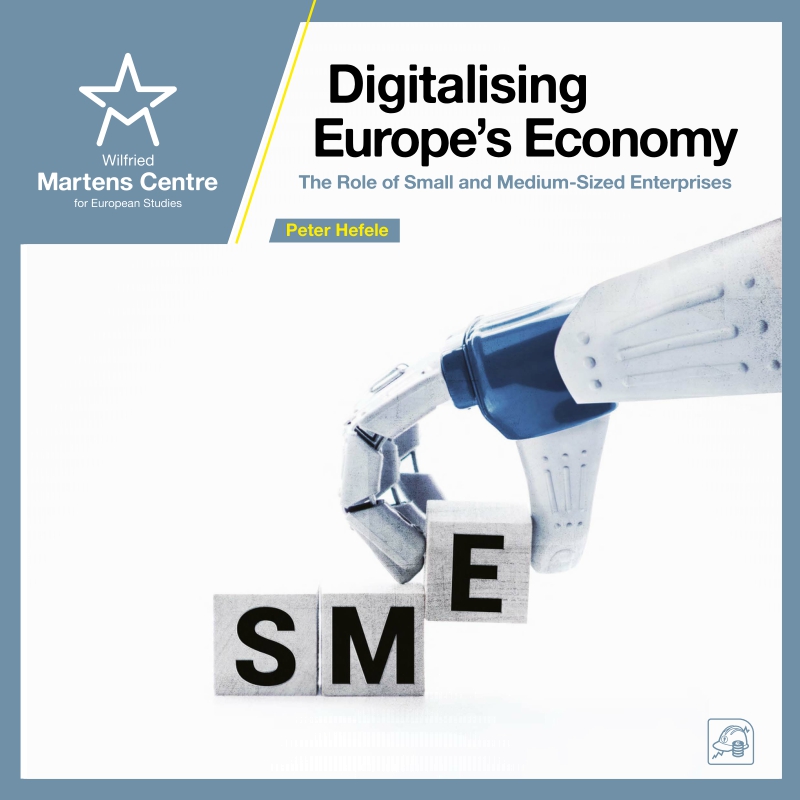
Title page 1
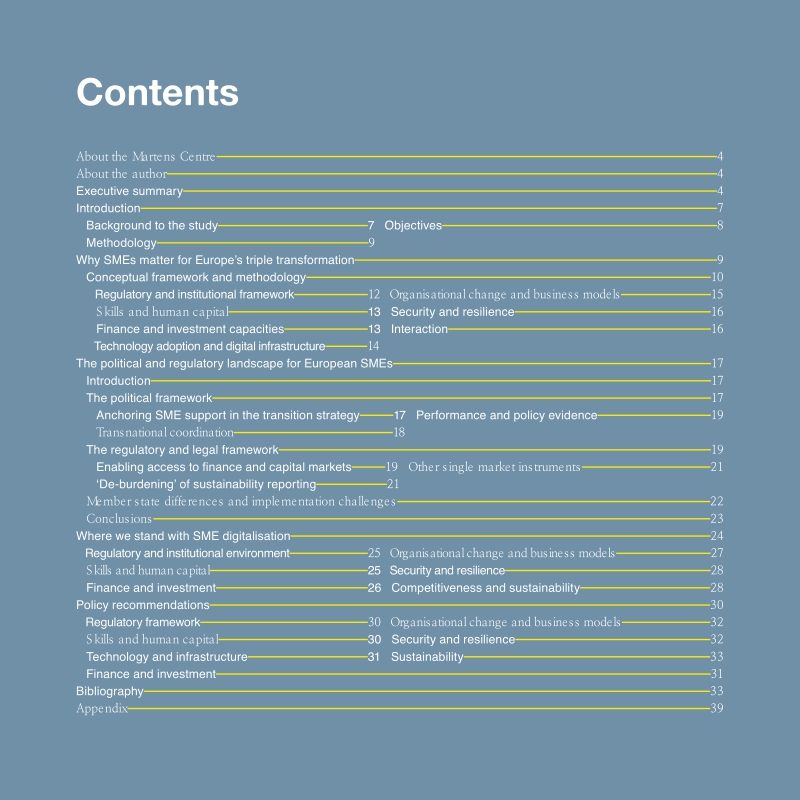
Contents 4
About the Martens Centre 5
About the author 7
Executive summary 9
Introduction 13
Background to the study 14
Objectives 15
Methodology 16
Why SMEs matter for Europe's triple transformation 17
Conceptual framework and methodology 19
Regulatory and institutional framework 21
Skills and human capital 21
Finance and investment capacities 22
Technology adoption and digital infrastructure 22
Organisational change and business models 23
Security and resilience 23
Interaction 24
The political and regulatory landscape for European SMEs 25
Introduction 26
The political framework 26
Anchoring SME support in the transition strategy 26
Transnational coordination 27
Performance and policy evidence 28
The regulatory and legal framework 28
Enabling access to finance and capital markets 28
'De-burdening' of sustainability reporting 30
Other single market instruments 30
Member state differences and implementation challenges 31
Conclusions 32
Where we stand with SME digitalisation 33
Regulatory and institutional environment 34
Skills and human capital 35
Finance and investment 36
Organisational change and business models 37
Security and resilience 38
Competitiveness and sustainability 38
Policy recommendations 41
Regulatory framework 42
Skills and human capital 42
Technology and infrastructure 43
Finance and investment 44
Organisational change and business models 44
Security and resilience 45
Sustainability 45
Bibliography 47
Appendix 54
Figure 1. Conceptual framework: digitalisation for SMEs 20
Figure 2. Key indicators for digital uptake (SMEs; 10-49 employees) 57
*표시는 필수 입력사항입니다.
| 전화번호 |
|---|
| 기사명 | 저자명 | 페이지 | 원문 | 기사목차 |
|---|
| 번호 | 발행일자 | 권호명 | 제본정보 | 자료실 | 원문 | 신청 페이지 |
|---|
도서위치안내: / 서가번호:

우편복사 목록담기를 완료하였습니다.
*표시는 필수 입력사항입니다.
저장 되었습니다.
