표·그림DB
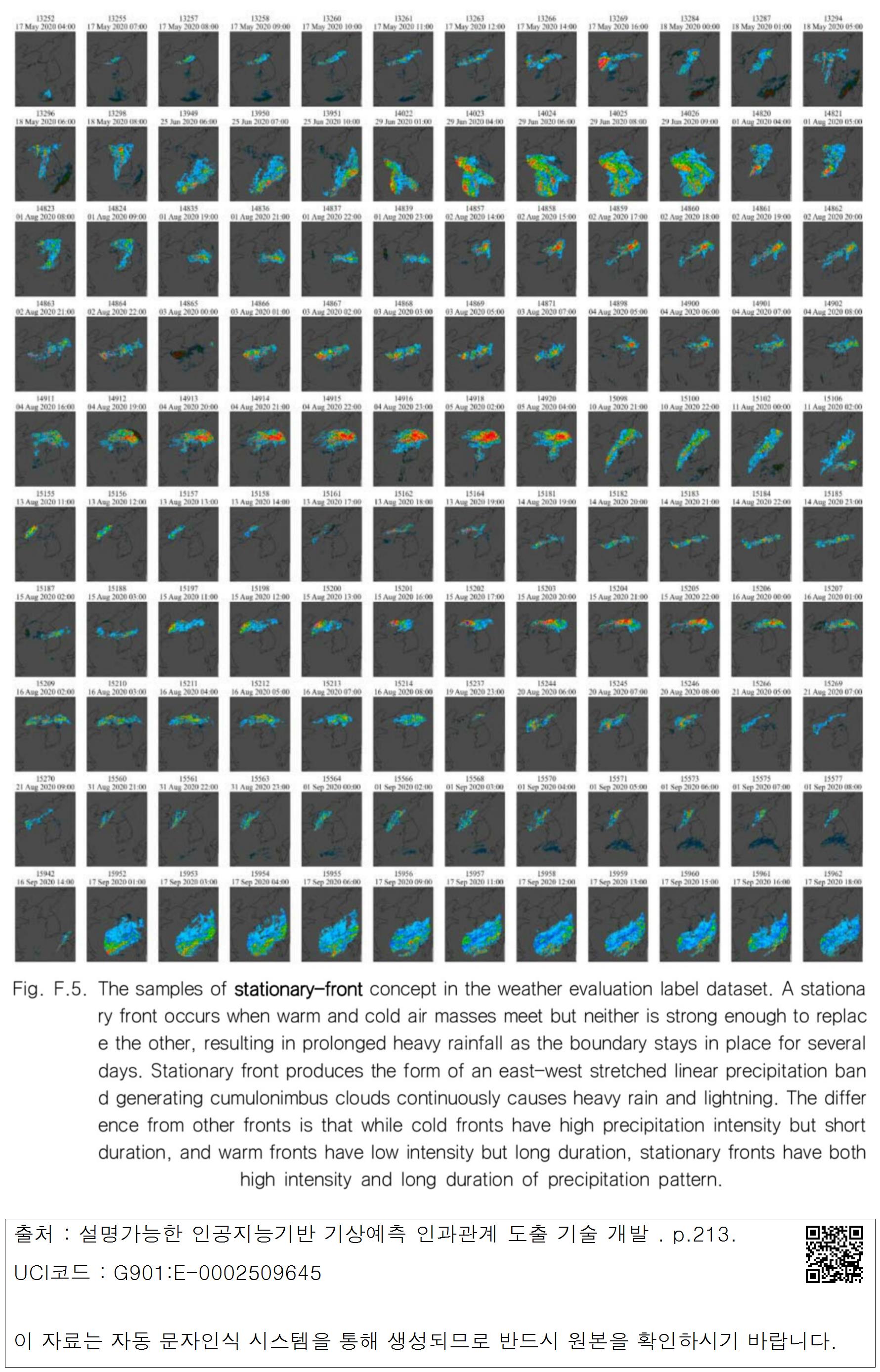
Fig. F.5. The samples of stationary-front concept in the weather evaluation label dataset. A stationary front occurs when warm and cold air masses meet but neither is strong enough to replace the other, resulting in prolonged heavy rainfall as the boundary stays in place for several days. Stationary front produces the form of an east-west stretched linear precipitation band generating cumulonimbus clouds continuously causes heavy rain and lightning. The difference from other fronts is that while cold fronts have high precipitation intensity but short duration, and warm fronts have low intensity but long duration, stationary fronts have both high intensity and long duration of precipitation pattern.
표·그림명
Fig. F.5. The samples of stationary-front concept in the weather evaluation label dataset. A stationary front occurs when warm and cold air masses meet but neither is strong enough to replace the other, resulting in prolonged heavy rainfall as the boundary stays in place for several days. Stationary front produces the form of an east-west stretched linear precipitation band generating cumulonimbus clouds continuously causes heavy rain and lightning. The difference from other fronts is that while cold fronts have high precipitation intensity but short duration, and warm fronts have low intensity but long duration, stationary fronts have both high intensity and long duration of precipitation pattern.

 대표어